



The Common Pattern Across Four Failures
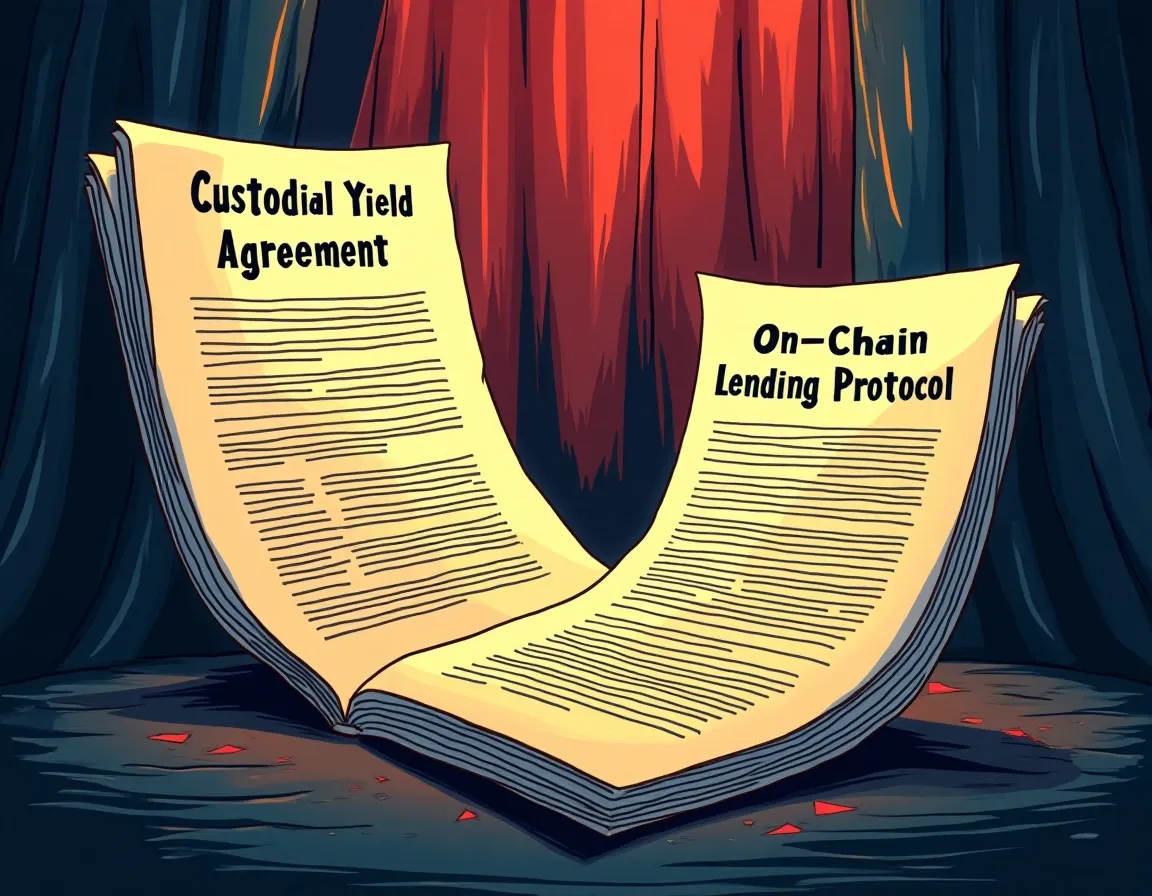
On 11 November 2022, FTX filed for Chapter 11 bankruptcy with an $8 billion shortfall in customer funds, according to court filings cited by multiple outlets. The collapse followed Celsius, which paused withdrawals on 13 June 2022 and filed for Chapter 11 on 13 July, Voyager Digital, which filed for bankruptcy in July 2022 after Three Arrows Capital defaulted on a $665 million loan in June, and Three Arrows Capital itself, which entered liquidation on 27 June 2022 following leveraged exposure to the Terra collapse in May.
What FTX, Celsius, Voyager and Three Arrows shared was not leverage alone, nor poor risk management, nor the timing of a market downturn. The common thread was commingling: customer deposits mixed with proprietary trading capital, depositor funds lent to affiliated entities without disclosure, and balance sheets that collapsed the moment anyone demanded proof of segregation.
According to SEC charges filed in December 2022, FTX diverted billions of dollars of customer funds to Alameda Research while promoting itself as a platform with “sophisticated, automated risk measures to protect customer assets.” A June 2023 report by FTX’s new management alleged that the exchange commingled customer and corporate funds from inception and lied to banks about the practice as early as 2020. Celsius operated a similar model, taking deposits and lending them out alongside DeFi positions, freezing accounts when withdrawal demand exceeded liquidity. Voyager lent over $650 million in customer deposits to Three Arrows Capital, which used those funds for leveraged bets that went to zero when Terra’s LUNA collapsed in May 2022.
The pattern was custodial yield platforms promising high returns, routing customer capital into undisclosed destinations, and failing when the underlying positions lost value or liquidity dried up. For anyone earning yield on stablecoins or crypto assets in November 2026, the question is not whether similar products still exist, but whether you can tell them apart from transparent alternatives.
Custodial Yield vs On-Chain Lending

The first distinction that matters is custody. When you deposit stablecoins into a centralized exchange yield product, you transfer legal ownership to the platform. The platform becomes the custodian, and your claim becomes a contractual promise to return equivalent assets. If the platform comingles those deposits with proprietary capital or lends them to counterparties that default, you have an unsecured claim in bankruptcy, not a property right to specific tokens.
On-chain lending protocols such as Aave, Compound and Morpho operate differently. According to data from DeFi Rate on 4 November 2026, USDC lending on Aave pays approximately 4.9% APY, and the largest pool, Maple’s Syrup USDC with $2.5 billion supplied, pays 5.1%. These are variable rates set algorithmically by utilization, not promotional offers. When you supply USDC to Aave V3, you receive aUSDC, an ERC-20 token representing your deposit plus accrued interest. The deposit remains in the protocol’s smart contract, visible on-chain, and withdrawable at any time subject to available liquidity in the pool. The protocol does not take custody; it holds your tokens in a contract governed by code and DAO votes, not by a corporate treasury deciding where to deploy client funds.
Stablecoin lending platforms ranked by Eco in October 2026 show Aave V3 offering 3.5% to 6.5% on USDC, Morpho vaults offering 4.1% to 6.8%, and Sky Lending offering 3.75% on sUSDS, all with transparent rate-setting mechanisms and on-chain visibility. As of mid-2026, Aave held $14.6 billion in total value locked according to industry sources, with stablecoin borrow rates running 3% to 4.3% APY per data from DeFi lending rate trackers. The spread between borrow and supply rates, the utilization percentage, and the collateral backing each loan are all observable in real time.
Centralized exchange yield products may offer higher headline rates, but the mechanism generating that yield is typically opaque. When an exchange advertises 6% to 14% on stablecoins, as some centralized platforms do according to November 2026 platform comparison data, the yield often comes from lending customer deposits to institutional borrowers, market makers, or internal trading desks. The Celsius, Voyager and FTX bankruptcies demonstrated what happens when those counterparties fail or when the platform’s own risk management proves inadequate. A 2026 article on stablecoin lending noted that CeFi yields above DeFi rates should carry an explicit custody-risk premium, and that “the history of the space, Celsius, BlockFi, Voyager, Gemini Earn, shows that CeFi yields above Tier 1 rates are compensation for custody risk that can crystallize quickly in bear markets.”
The Questions That Distinguish Real Risk

The difference between custodial and non-custodial yield is the starting point, not the endpoint. On-chain lending has its own risks: smart contract exploits, governance attacks, bad debt from under-collateralized loans, and oracle failures. The April 2026 Kelp DAO bridge exploit caused approximately $196 million in bad debt on Aave and triggered $6.6 billion in withdrawals, according to a May 2026 analysis of stablecoin yield models. On-chain does not mean risk-free; it means transparent.
When evaluating any yield product, the questions that mattered in 2022 still matter in 2026. Where does the yield come from? On DeFi lending protocols, yield comes from borrowers paying interest to lever up positions or short assets. The rate is variable and reflects real economic activity. On centralized platforms, yield typically comes from the platform lending your deposits to third parties. If the platform will not disclose the counterparties, the collateral, or the terms, you are accepting blind credit risk.
Can you withdraw at any time? On Aave, Compound and Morpho, withdrawals are instant as long as liquidity remains in the pool. Utilization above 90% can tighten available liquidity, but the rate curve is designed to incentivize repayment before the pool locks. Centralized platforms often impose withdrawal limits, minimum holding periods, or redemption queues. Celsius froze withdrawals on 13 June 2022, FTX halted withdrawals on 8 November 2022, and Voyager paused withdrawals in July 2022 before filing for bankruptcy. The ability to withdraw is not a guarantee of solvency, but the inability to withdraw is a clear signal of illiquidity.
Is the collateral visible and segregated? DeFi lending protocols over-collateralize every loan. Aave V3 requires ETH borrowers to post collateral worth 125% of the borrowed amount, with an 80.5% max loan-to-value ratio per governance parameters as of mid-2026. If the value of the collateral falls below the liquidation threshold, the position is liquidated automatically by on-chain keepers, and the protocol remains solvent. FTX, by contrast, gave Alameda Research a “virtually unlimited line of credit” funded by customer deposits and exempted Alameda from FTX’s risk mitigation measures, according to the SEC’s December 2022 complaint. Three Arrows Capital borrowed $665 million from Voyager with collateral that vaporized when LUNA collapsed. The structure of the loan and the quality of the collateral are not implementation details; they are the entire risk proposition.
Who controls the code and the assets? Aave, Compound and Morpho are governed by DAOs. Changes to risk parameters, rate curves, and collateral lists require on-chain votes. Centralized platforms are controlled by executives and shareholders. Sam Bankman-Fried transferred billions in customer funds to Alameda at his own direction. The new CEO of FTX, John Ray III, stated in a 17 November 2022 court filing that he had “never in my career seen such a complete failure of corporate controls and such a complete absence of trustworthy financial information.” Governance is not a theoretical concern; it determines who can move your money and under what circumstances.
What Current Rates Signal
As of early November 2026, stablecoin lending on the largest DeFi protocols pays 3.5% to 6.5% on USDC and USDT according to rate aggregators, with higher rates available in smaller pools or curated vaults that accept additional risk. FDIC-insured savings accounts at U.S. banks offered 4% to 5% APY in early 2026 per industry data. The spread between DeFi lending and insured deposits has compressed significantly from 2022, when some centralized platforms advertised double-digit yields on stablecoins.
That compression reflects two forces: rising baseline rates as the Federal Reserve raised the funds rate through 2022 and 2023, and reduced leverage demand in crypto markets as risk appetite cooled. DeFi stablecoin lending yield is driven by demand from leveraged crypto traders; when market sentiment is subdued and leverage demand falls, utilization rates drop and yields compress. Aave’s USDC yield sat at approximately 2.61% in April 2026, below the rate offered by conventional cash management accounts in the same period, according to a June 2026 analysis of stablecoin yield models.
Centralized platforms still advertise higher yields, but the mechanism has not changed. A November 2026 comparison of centralized lending platforms listed advertised rates from 6% to 14% on stablecoins, depending on lockup periods and program requirements. Those rates are not generated by on-chain borrowing demand; they are generated by the platform taking custody of your assets and deploying them into strategies that may include lending to institutional counterparties, market making, or proprietary trading. The platforms that offer the highest rates are often the ones taking the most opacity and the most credit risk.
Understanding what staking means and where yield comes from is foundational. Proof-of-stake networks pay staking rewards from inflation and transaction fees. Liquid staking tokens such as stETH or rETH let you earn those rewards while keeping the tokens tradeable. That yield is transparent and does not depend on a custodian’s solvency. Lending yield, whether on-chain or centralized, depends entirely on borrower repayment and platform solvency. The two are often conflated in marketing, but the risk profiles are completely different.
Why Transparency Matters More Than Yield
The lesson from FTX, Celsius, Voyager and Three Arrows is not that high yield is dangerous, but that opaque yield is. Centralized platforms can offer competitive, even safe, yield products if they disclose the use of funds, segregate customer assets, maintain adequate reserves, and submit to regular audits. The problem in 2022 was not that platforms paid yield; it was that they paid yield by secretly commingling customer deposits with proprietary capital, lending to undisclosed affiliates, and maintaining no separation between customer funds and corporate balance sheets.
On-chain lending does not eliminate risk, but it makes risk observable. You can verify the total value locked, the utilization rate, the collateral backing each loan, and the liquidation threshold for every position. You can see the smart contract code, the audit reports, and the governance votes that change protocol parameters. You can withdraw at any time subject to pool liquidity, and if liquidity runs out, the rate curve spikes to incentivize repayment. None of those features prevent exploits, oracle failures, or governance attacks, but they do prevent the specific failure mode that destroyed FTX, Celsius and Voyager: the silent commingling of customer funds.
For centralized platforms, transparency requires voluntary disclosure. Some exchanges publish proof-of-reserves audits, segregate customer funds by jurisdiction, and maintain 1:1 backing for deposits. Others do not. The difference is not visible from the advertised APY; it is visible only from the disclosures the platform chooses to make and the legal structure it operates under. If a platform will not show you where your funds go, how they are secured, or what counterparties hold them, the yield you are earning is compensation for accepting blind custodial risk.
Comparing exchange staking versus self-custody staking illustrates the trade-off. Exchanges charge 25% to 40% commission on staking rewards but handle all operational complexity. Self-custody captures full yield but requires you to manage keys, run or delegate to validators, and accept slashing risk. The commission is the cost of convenience, not the cost of safety. Custodial lending, by contrast, does not just charge a fee; it transfers legal ownership of your assets to the platform, and the risk is not operational but existential.
What Patterns Still Exist
Four years after FTX, the same risk patterns remain in the market. Centralized platforms still offer yield products that require you to transfer custody, trust the platform to deploy funds prudently, and accept contractual promises instead of on-chain receipts. Some of those platforms are solvent, well-capitalized, and regulated. Others are not, and the marketing looks identical.
DeFi lending protocols have matured significantly since 2022. Aave V4 launched in 2026 with a hub-and-spoke architecture designed to isolate risk across markets. Compound V3 uses single-base-asset markets that simplify collateral risk. Morpho routes deposits through curated vaults with explicit risk tiers. None of these improvements eliminate smart contract risk, but they do address the specific vulnerabilities that emerged in earlier protocol versions. The signals that look like problems in DeFi are often governance noise, TVL drift, or temporary APY compression. The signals that actually matter are failed liquidations, bad debt accumulation, and exploits that drain protocol reserves.
When evaluating current yield opportunities, the questions from 2022 remain the right questions. Do you control the private keys, or does the platform? Is the collateral backing your deposit visible on-chain, or is it a corporate promise? Can you withdraw at any time, or are there lockups, limits, or redemption queues? Does the yield come from transparent on-chain activity, or from undisclosed lending to unknown counterparties? The answers to those questions determine whether you are earning yield on a position you can monitor and exit, or on a custodial claim that only pays if the platform remains solvent.
For more on evaluating specific risks, see what to verify before moving six figures into a stablecoin yield product and what simultaneous yield drops signal across multiple protocols.
The Risk That Crystallizes Fast
FTX collapsed in 10 days. Binance announced on 6 November 2022 that it would sell its FTT holdings, triggering $5 billion in withdrawal requests over 72 hours. FTX halted withdrawals on 8 November and filed for Chapter 11 on 11 November. Celsius froze withdrawals on 13 June 2022 and filed for bankruptcy a month later. Voyager followed the same pattern. The speed of collapse is a feature of custodial platforms with commingled funds: once depositors doubt the solvency of the platform, withdrawal demand concentrates in hours, and if the platform cannot meet that demand because the funds are deployed into illiquid positions or lent to insolvent counterparties, the platform fails immediately.
On-chain lending does not fail this way. A surge in withdrawals from Aave or Compound pushes utilization toward 100%, which causes the borrow rate to spike exponentially. Borrowers face immediate incentive to repay, new suppliers are attracted by the high rate, and the pool rebalances. If a borrower becomes insolvent, their collateral is liquidated automatically before the protocol takes a loss. The system is designed to absorb shocks without freezing, and while it can experience liquidity crunches, it cannot experience the silent insolvency that killed FTX and Celsius.
The pattern that destroyed FTX, Celsius, Voyager and Three Arrows was not complexity but opacity. Platforms mixed customer deposits with proprietary funds, lent to affiliated entities without disclosure, maintained no separation between client assets and corporate balance sheets, and failed the moment anyone demanded proof. That pattern still exists in centralized yield products, and the only defense is to ask the questions that reveal it: who holds the keys, where are the funds deployed, and can you exit when the utilization curve spikes.
On 11 November, that question is worth asking again. Not because the anniversary matters, but because the risk it revealed has not disappeared.
The Weekly Yield Report
You have just read what separated custodial failures from transparent yield in 2022. The platforms offering 14% today will not disclose the same details tomorrow.
Every Thursday: where crypto yield actually is – stablecoins, liquid staking and DeFi lending, with the risk named next to the rate and what changed since last week.
Free. No trade calls, no allocations, no hype. Unsubscribe in one
click.
Source link