

The NU7 Mechanism: Fee Recycling for Long-Term Security

Zcash’s NU7 upgrade went live November 6, 2026, at block 3,543,405. The core mechanism change is fee recycling. The protocol now redirects 60 percent of transaction fees toward future mining rewards. This addresses a specific failure mode for privacy coins: insufficient miner incentives as block subsidies decline toward zero over time.
Bitcoin faces the same structural problem. Block rewards halve every four years. Eventually, transaction fees must replace subsidies entirely. For privacy protocols, this creates additional stress. Private transactions have larger data footprints than transparent transactions. Larger transactions mean higher fees. Higher fees reduce usage. Lower usage reduces fee revenue. The feedback loop is mechanistically problematic.
The fee recycling mechanism redirects 60 percent of fees paid today into a pool that supplements miner revenue in future blocks. This creates a smoothing buffer. Miners receive more stable income over time rather than spiky fee-only revenue after subsidies expire. The mechanism does not eliminate the problem. It delays the stress test by redistributing fee revenue across a longer time horizon.
Block Time Reduction: Capacity Increase and Reorganization Risk

NU7 reduced the target block interval from 75 seconds to 25 seconds. This triples block frequency. The upgrade documentation estimates simple private payment capacity increased from about three transactions per second to more than six. That is a 2x capacity increase from 3x faster blocks. The difference is block size limits. Not every block can carry triple the transactions.
Faster block times introduce a specific trade-off. Higher throughput capacity comes with increased reorganization risk. A 25-second block interval means less time for block propagation across the network. If a node receives two competing blocks close together, the chain can temporarily fork. Shorter intervals increase the probability of this condition. Ethereum experienced this at 12-second blocks before moving to proof-of-stake. Zcash is now at 25 seconds, which is faster than Bitcoin’s 10 minutes but slower than Ethereum’s old interval.
The reorganization risk is not theoretical. It is a known outcome of shorter block times in proof-of-work systems. For private payment infrastructure, reorganizations create a user experience problem. A transaction that appears confirmed in block N might disappear if block N gets orphaned. Users need to wait for additional confirmations to mitigate this risk. The faster blocks provide higher throughput but do not necessarily provide faster settlement certainty.
Sprout Pool Retirement: 12,224 ZEC Now Unspendable
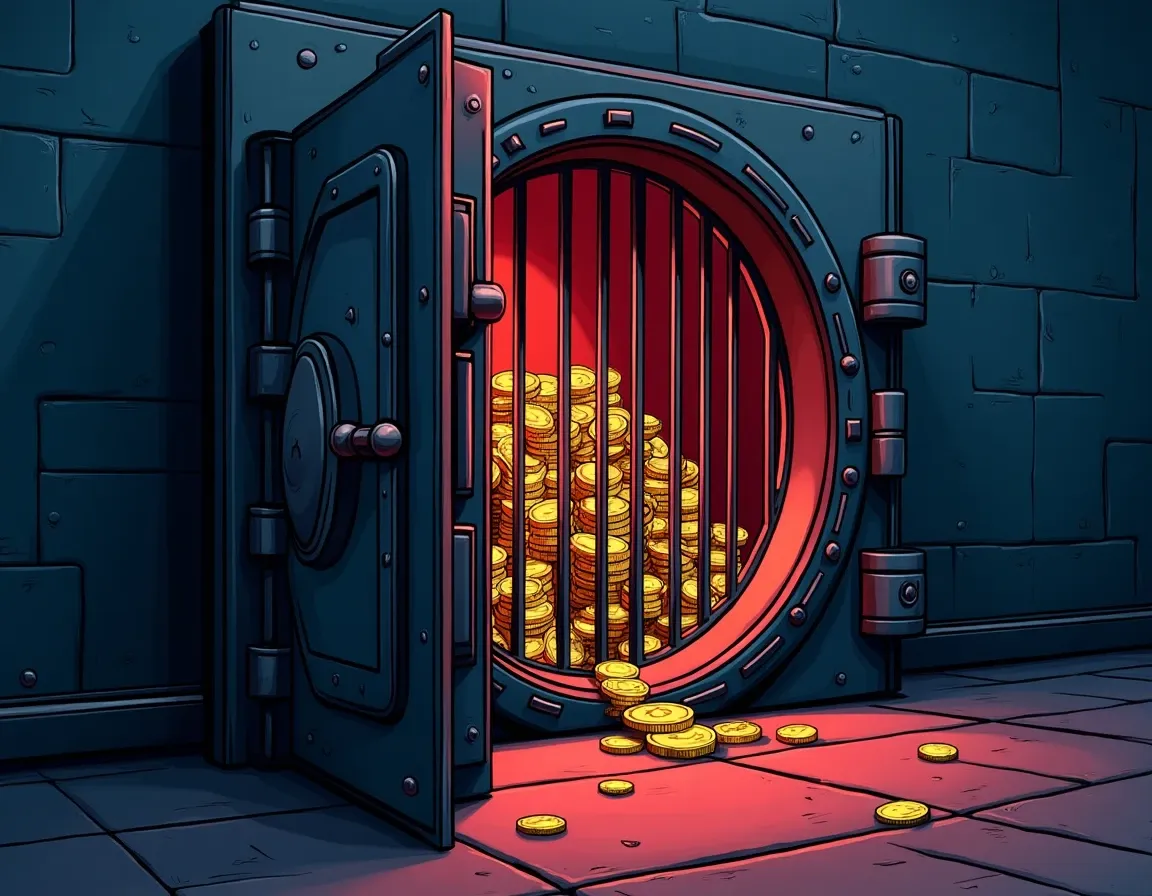
NU7 retired the Sprout privacy pool. Sprout was Zcash’s original shielded transaction layer from 2016. The protocol replaced it with Sapling in 2018, then Orchard in 2022. Sprout has been deprecated for years. NU7 makes the deprecation final. Approximately 12,224 ZEC remain in the Sprout pool, now permanently unspendable. At current prices, that represents roughly $16 million in permanently locked value.
This is a one-time supply reduction. The coins are not burned. They are inaccessible. The effect on circulating supply is functionally equivalent to a burn, but the mechanism is different. The coins still exist on-chain. No one can move them. This matters for supply accounting. The total supply figure does not change. The spendable supply does.
For users, the takeaway is straightforward. If you held shielded ZEC in the Sprout pool and did not migrate to Sapling or Orchard before November 6, 2026, those coins are gone. The protocol gave years of advance notice. The migration window closed. The mechanism does not allow recovery.
Wallet Synchronization Efficiency: Download Size Reduction
NU7 reduced wallet download sizes from 271 MB to 169 MB. This is a 37 percent reduction. The change comes from retiring Sprout data and optimizing the blockchain’s data structure. Smaller download sizes improve the user experience for new wallet installations and wallet recoveries.
This is not a direct income mechanism. It is an infrastructure improvement that reduces friction for participation. Lower friction increases the likelihood of sustained network usage. Sustained usage generates transaction fees. Those fees now feed back into miner rewards through the fee recycling mechanism. The components connect.
For DeFi protocols that integrate privacy layers, faster synchronization reduces the operational cost of running nodes. Node operators need to maintain synchronized state to validate transactions and participate in the network. A 37 percent reduction in download size translates to faster onboarding and lower bandwidth costs. This is a marginal improvement, not transformational, but it compounds over time.
The Long-Term Security Model: Fee Dependency and Usage Risk
The fee recycling mechanism depends on sustained transaction volume. If usage drops, fee revenue drops. If fee revenue drops, the recycling pool shrinks. If the recycling pool shrinks, miner income declines. If miner income declines, hash rate drops. If hash rate drops, the network becomes vulnerable to 51 percent attacks. This is the chain of failure conditions.
Zcash’s security model now explicitly depends on transaction fees replacing block subsidies over time. The fee recycling mechanism smooths the transition, but it does not eliminate the dependency. The protocol must maintain sufficient usage to generate enough fees to sustain miner participation. This is the same challenge Bitcoin faces, but with an additional constraint. Privacy transactions have higher data overhead than transparent transactions. Higher overhead limits throughput. Lower throughput limits the total fee pool at any given fee rate.
The stress condition is sustained low usage during a period of declining block subsidies. If this condition occurs, the fee pool cannot support miner revenue. Miners drop off. The network becomes less secure. The mechanism is sound only if usage remains sufficiently high. That is an assumption, not a guarantee.
Monitoring the Mechanism: On-Chain Metrics to Watch
If you hold ZEC or participate in the network, you can track the health of the fee recycling mechanism using on-chain data. The key metrics are transaction volume, average transaction fee, total fee revenue per block, and hash rate. These are publicly available through blockchain explorers.
Watch for divergence between transaction volume and hash rate. If volume drops but hash rate remains stable, the fee recycling pool is likely supporting miner income. If volume drops and hash rate also drops, the mechanism is under stress. The fee pool is not sufficient to replace subsidies. That is the early warning signal.
Another metric to monitor is the distribution of transaction types. Zcash supports both transparent and shielded transactions. Shielded transactions generate higher fees due to larger data size. If the mix shifts toward transparent transactions, total fee revenue declines even if transaction count remains constant. The mechanism depends on shielded transaction usage. Track the shielded pool activity separately.
The Takeaway
NU7 implements a fee recycling mechanism that redirects 60 percent of transaction fees to future mining rewards, creating a buffer as block subsidies decline. The mechanism is sound if transaction volume remains high enough to generate sufficient fees. The stress condition is sustained low usage during subsidy reduction. Monitor transaction volume, fee revenue per block, and hash rate for early signs of mechanism failure. The faster block times increase capacity but introduce higher reorganization risk. Wait for additional confirmations before treating shielded transactions as final.
Frequently Asked Questions
What does Zcash NU7’s fee recycling mechanism do?
NU7 redirects 60 percent of transaction fees into a pool that supplements future mining rewards. This creates a buffer to sustain miner income as block subsidies decline over time. The mechanism smooths the transition from subsidy-dependent to fee-dependent security but does not eliminate the underlying dependency on sustained transaction volume to generate sufficient fee revenue.
Why did Zcash reduce block time to 25 seconds?
Faster block times increase transaction throughput capacity. NU7 estimates private payment capacity increased from about three transactions per second to more than six. The trade-off is higher reorganization risk. Shorter block intervals give less time for network-wide block propagation, increasing the probability of temporary chain forks. Users should wait for additional confirmations before treating transactions as final.
What happened to coins in the Sprout pool?
NU7 retired the Sprout privacy pool, making approximately 12,224 ZEC permanently unspendable. Sprout was Zcash’s original shielded transaction layer from 2016, replaced by Sapling in 2018 and Orchard in 2022. The protocol gave years of advance notice to migrate. Users who did not move funds to newer pools before November 6, 2026, lost access to those coins permanently.
How does NU7 affect Zcash’s long-term security?
Zcash security now explicitly depends on transaction fees replacing block subsidies. The fee recycling mechanism delays the stress test by redistributing fee revenue across a longer time horizon. The failure condition is sustained low usage during subsidy decline. If transaction volume drops, fee revenue drops, the recycling pool shrinks, miner income declines, and hash rate falls, making the network vulnerable to attacks.
What on-chain metrics should I monitor after NU7?
Track transaction volume, average transaction fee, total fee revenue per block, and hash rate. Watch for divergence between volume and hash rate. If volume drops but hash rate remains stable, the fee recycling pool is supporting miner income. If both drop together, the mechanism is under stress. Also monitor the ratio of shielded to transparent transactions, because shielded transactions generate higher fees.
The Weekly Yield Report
You have just decomposed Zcash’s fee recycling mechanism and identified its dependency on sustained transaction volume. That dependency is an ongoing stress test, not a one-time event.
Every Thursday: where crypto yield actually is – stablecoins, liquid staking and DeFi lending, with the risk named next to the rate and what changed since last week.
Free. No trade calls, no allocations, no hype. Unsubscribe in one
click.
Source link