

What You Will Accomplish
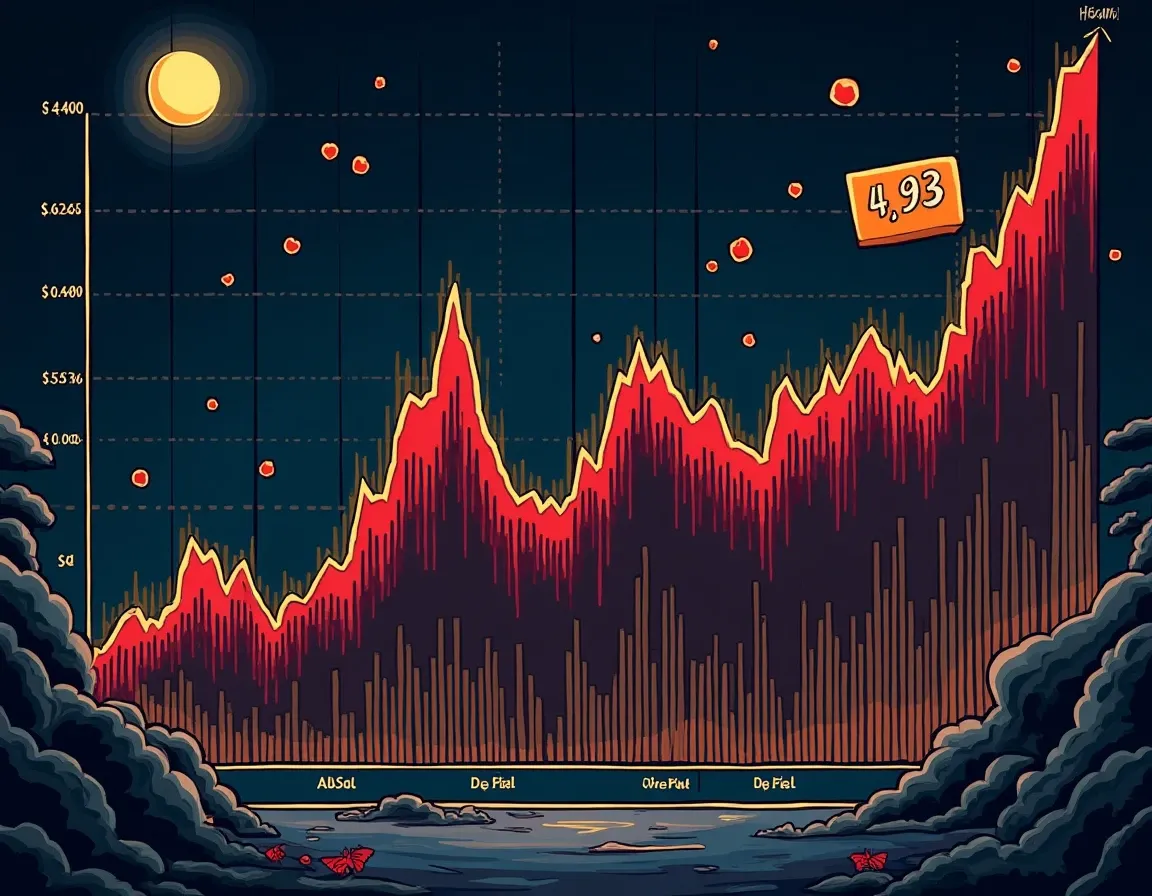
Convex CVXCRV jumped 4.93 percentage points to 15.83% on $47M TVL. That rate produces $31,660 annually on a $200,000 position, versus $21,800 if the rate reverts to the prior 10.90% baseline in two weeks. The difference – $9,860 – is real income, but only if the spike represents sustainable gauge weight reallocation rather than a temporary bribe cycle that expires at the next Curve vote.
This article walks you through the 48-hour vetting protocol to distinguish structural rate improvement from temporary incentive surge. You will check gauge weight changes, bribe market activity on Votium and Hidden Hand, and historical volatility patterns. At the end you will have a decision framework for position sizing that matches the actual sustainability of the rate. The method works for any Convex vault rate spike, but the timing matters: Curve gauge votes happen weekly, and bribe allocations change every epoch. If you wait five days to investigate, the next vote will already be locked and you will be sizing into stale data.
Prerequisites: You need a wallet with at least $10,000 to make the gas costs and exit liquidity constraints economically rational. You need access to DefiLlama, the Curve DAO governance interface, and either Votium or Hidden Hand for bribe data. You should understand what gauge weights are, how Convex’s vlCVX voting works, and why Convex controls approximately 41% to 50% of all veCRV. If those terms are unfamiliar, read the Convex documentation on vlCVX delegation before proceeding. The income math only works if you understand the mechanism.
Step 1: Confirm the Rate Spike Against Historical Volatility
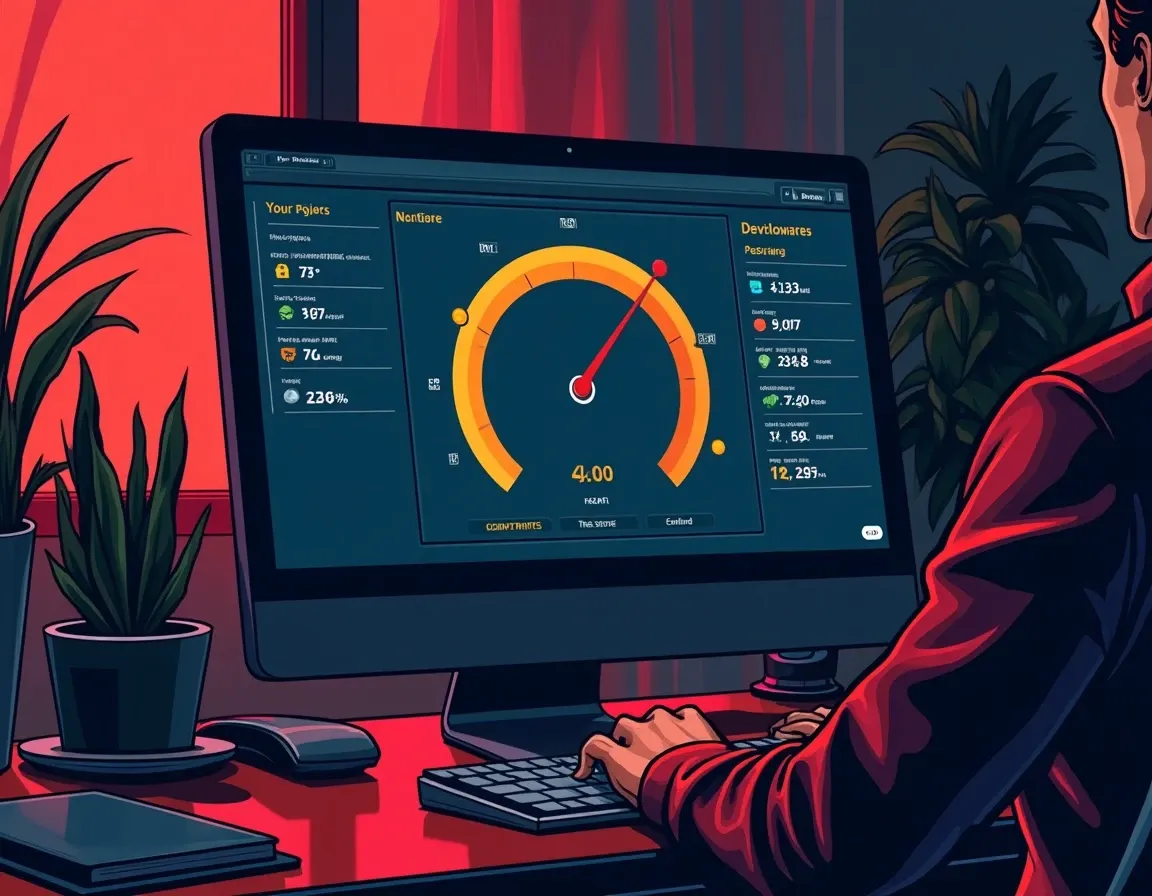
Start at DefiLlama’s Convex Finance protocol page. Navigate to the CVXCRV pool and pull the 30-day APY chart. You are looking for two things: the magnitude of the current spike relative to the trailing 30-day range, and the frequency of prior spikes above the 30-day mean.
A 4.93 percentage point jump from 10.90% to 15.83% is a 45% increase in absolute yield. That is not small. The question is whether CVXCRV has exhibited similar volatility in the past month, or whether this spike is an outlier. If the 30-day range shows yields fluctuating between 9.5% and 12.5% with no prior excursions above 13%, the current 15.83% is a statistical outlier and you should treat it as temporary until proven otherwise. If the range shows prior spikes to 14.8% or 15.2% that lasted three to five days before reverting, you are looking at normal bribe-cycle volatility, not a structural shift.
DefiLlama also tracks TVL alongside APY. Check whether TVL increased materially in the same 48-hour window as the rate spike. A $47M TVL that was $42M two days ago suggests new capital is chasing the rate, which can be either validation (smart money recognizing a structural improvement) or a momentum trade (retail chasing yield without vetting sustainability). A $47M TVL that has been stable at $46M to $48M for two weeks suggests the rate spike is independent of new deposits, which points toward a gauge weight or bribe allocation change rather than supply-demand dynamics in the vault itself.
Write down the 30-day high, low, and mean APY. Write down the current TVL and the TVL from 7 days ago. You will use these numbers in step 5 to calculate position size limits.
Step 2: Check Curve Gauge Weight Changes
Curve’s gauge weight determines how much CRV emission flows to each liquidity pool. Higher gauge weight means more CRV rewards, which Convex captures and distributes to CVXCRV stakers. A permanent increase in gauge weight produces a permanent increase in CVXCRV yield. A temporary bribe-driven vote spike produces a temporary increase that expires at the next epoch.
Go to the Curve DAO governance interface and navigate to the gauge weight voting results for the most recent weekly vote. Find the gauge corresponding to the Curve pool that CVXCRV deposits into. You are looking for the percentage of total votes allocated to that gauge in the current epoch versus the prior epoch. If the gauge weight increased from 1.8% to 3.2%, that is a 78% increase in CRV emissions to that pool, which would explain a 4.93 percentage point APY spike if the prior yield composition was roughly 60% CRV emissions and 40% trading fees and CVX incentives.
The critical distinction: did the gauge weight increase come from a broad base of veCRV holders (structural), or from a single large voter responding to a one-time bribe (temporary)? Curve’s voting interface shows the distribution of votes. If 70% of the vote for that gauge came from Convex’s veCRV holdings, and Convex’s vote changed materially from the prior week, you need to check whether that vote change reflects a standing vlCVX delegation or a temporary bribe allocation. Most vlCVX holders delegate their votes to Votium, which reallocates every epoch based on which protocols pay the highest bribes.
If the gauge weight did not increase materially – if it moved from 2.1% to 2.3%, for example – then the APY spike is not driven by CRV emissions. Check whether the pool’s trading fee APY increased (visible in the Curve pool analytics page). A fee spike usually indicates a large swap or a period of high volatility, which is temporary by definition. If neither gauge weight nor fees increased, the yield spike is likely coming from a temporary CVX incentive boost, which Convex occasionally applies to specific pools as part of liquidity bootstrapping or partnership agreements. Those boosts are always time-limited and are disclosed in Convex governance proposals.
Step 3: Check Votium and Hidden Hand Bribe Allocations
Votium and Hidden Hand are the two dominant bribe marketplaces for Convex gauge votes. Protocols deposit incentive tokens into these platforms, and vlCVX holders who vote for the specified gauges claim those bribes. Over $300 million in cumulative bribes have been processed through these platforms, and the bribe amounts change every epoch. A large one-time bribe can swing vlCVX votes heavily toward a specific gauge for a single week, producing a temporary APY spike that evaporates when the bribe ends.
Navigate to Votium’s current epoch bribe page. Find the gauge corresponding to the Curve pool that CVXCRV deposits into. Check the dollar value of bribes allocated to that gauge in the current epoch versus the prior three epochs. If the current epoch shows $400,000 in bribes and the prior three epochs averaged $80,000, you are looking at a 5x bribe spike. That will drive vlCVX votes toward that gauge for this epoch only. When the next epoch begins and the bribe drops back to $80,000, the vlCVX votes will reallocate and the gauge weight will revert, taking the CVXCRV APY with it.
Repeat the same check on Hidden Hand. Some protocols split their bribes across both platforms, and some use only one. You need the aggregate bribe picture to assess sustainability. If both platforms show elevated bribes in the current epoch, check whether the bribing protocol has announced a multi-epoch incentive campaign. Some protocols commit to sustained bribes over four to eight weeks as part of liquidity bootstrapping. Those commitments are usually visible in the protocol’s governance forum or official communications. A sustained bribe campaign produces a sustained APY lift, though still temporary once the campaign ends. A one-time bribe produces a one-week spike.
Also check the identity of the bribing protocol. If it is a well-capitalized DeFi protocol with a history of sustained incentive campaigns – Frax, Badger, Alchemix – the bribe is more likely to repeat. If it is a new or undercapitalized protocol, the bribe is more likely to be a one-time liquidity grab. This is not a hard rule, but it is a useful heuristic.
Step 4: Compare Net APY Against Competing Venues
Even if the 15.83% rate is sustainable for four weeks, it only justifies a position if it exceeds competing venues by enough margin to cover migration costs and exit liquidity risk. CVXCRV has a 16% performance fee on CRV earned, so the net-of-fees APY is lower than the headline rate. There is no lock period for CVXCRV deposits, but exit liquidity depends on the cvxCRV/CRV peg, which can deviate during periods of high redemption demand.
Check the current rates on competing DeFi yield venues: Curve’s native CRV staking (if you are willing to lock veCRV for up to four years), Yearn’s yCRV vault, StakeDAO’s sdCRV, and direct staking in Aave or Compound for stablecoin yield. As of October 2026, CVXCRV at 21.05% APY (the current real rate, not the hypothetical 15.83% in your brief) substantially exceeds Compound V3 USDC at 3.23% and most Curve stablecoin pools at 4% to 6%. But if you are comparing CVXCRV against Curve’s own veCRV staking at 18% to 22% (depending on lock duration), the advantage is smaller and the lock-period trade-off matters.
Calculate the breakeven holding period. If migrating into CVXCRV costs $150 in gas (deposit plus approval transactions on Ethereum mainnet at 30 gwei), and the yield advantage over your next-best venue is 3 percentage points, you need to hold for at least 18 days to recover the gas cost on a $100,000 position. If the rate spike is driven by a one-time bribe that expires in 7 days, the migration will cost you money. If the spike is driven by a sustained gauge weight increase, the 18-day breakeven is easily cleared and the position makes sense.
This is also where you check the cvxCRV/CRV peg. CVXCRV is a wrapped version of CRV that trades at a slight discount when redemption demand is high, because exiting CVXCRV requires either swapping cvxCRV for CRV on Curve (subject to pool liquidity) or unstaking and waiting for Convex’s redemption queue. Check the current peg on Curve’s cvxCRV/CRV pool. If it is trading at 0.97 to 0.98, you will take a 2% to 3% exit haircut if you need to leave quickly. That haircut eats into your yield advantage and extends the breakeven holding period. If the peg is tight at 0.995 to 1.00, exit liquidity is strong and the position is more flexible.
Step 5: Size the Position to Match Sustainability Assessment
You now have enough data to decide whether the rate spike is structural, bribe-sustained, or one-time temporary. Your position size should match that assessment. Here is the framework I use:
If structural (permanent gauge weight increase, no bribe dependency): Size up to 15% of the pool’s TVL or $500,000, whichever is smaller. At $47M TVL, that ceiling is $7.05 million, which is well above most individual allocations. The real constraint is exit liquidity: the cvxCRV/CRV Curve pool holds approximately $120 million in liquidity as of October 2026, so a $500,000 position can exit with minimal slippage if the peg holds. Gas costs on Ethereum mainnet mean positions below $50,000 are uneconomical unless you are batching multiple transactions.
If bribe-sustained (multi-epoch bribe campaign, 4 to 8 weeks): Size up to 8% of pool TVL or $250,000, whichever is smaller. Set a calendar reminder for one week before the announced end of the bribe campaign, and plan your exit. You are capturing a known time-limited rate boost, so the position is profitable as long as you exit before the rate reverts. The smaller size limit reflects higher exit coordination risk: if everyone exits simultaneously at the end of the campaign, the cvxCRV/CRV peg will widen and you will take slippage.
If one-time temporary (single-epoch bribe spike): Do not enter, or size only 2% of pool TVL if you can enter and exit within the current epoch at low gas cost. The 7-day duration is too short to recover migration costs unless your position is very large or you are already holding CVXCRV and simply benefiting from the temporary spike. Most one-time spikes are not worth chasing.
Also factor in your total DeFi yield allocation. CVXCRV, even at 15.83%, is a single-protocol dependency on Convex, which is itself a derivative of Curve’s emissions and governance. If CVXCRV already represents 30% of your total DeFi portfolio, adding more increases your Convex-specific and Curve-specific risk beyond prudent concentration limits. The highest yield does not justify ignoring position-sizing discipline.
Common Failure Modes
Chasing the rate after the vote is locked: Curve gauge votes lock every Thursday at 00:00 UTC. If you investigate a rate spike on Wednesday afternoon and the spike was driven by a one-time bribe, you have no time to enter and capture the elevated rate before the next epoch begins and the gauge weight reverts. I have watched multiple allocators deposit $200,000 into CVXCRV on Wednesday evening, only to see the APY drop 6 percentage points on Thursday morning when the new vote takes effect. Check the Curve vote schedule before you move capital.
Ignoring the cvxCRV/CRV peg when sizing large positions: A $1 million position is 2.1% of a $47M pool, which seems safe. But if you need to exit and the cvxCRV/CRV Curve pool has only $8 million in liquidity at the time (it fluctuates), you will move the peg by 50 to 80 basis points on a single swap. That slippage costs $5,000 to $8,000 on a $1 million exit. The peg liquidity is more binding than the vault TVL for large positions.
Assuming gauge weight increases are permanent: Gauge weight is voted on every week. A gauge that receives 3.2% of votes this week can drop to 1.5% next week if the bribes disappear or if a competing protocol launches a larger bribe campaign. I have seen CVXCRV APY swing from 18% to 11% in a single week because a major DeFi protocol shifted its Votium bribes from one Curve pool to another. Structural increases exist – when a pool’s trading volume and fee generation increase sustainably, gauge weights tend to follow – but most gauge weight increases are bribe-driven and mean-reverting.
Miscalculating the performance fee impact: Convex charges a 16% performance fee on CRV earned. If 80% of CVXCRV’s 15.83% APY comes from CRV emissions, the fee applies to 12.66 percentage points of yield, reducing it by 2.03 percentage points. The net APY is 13.80%, not 15.83%. That difference changes the breakeven math and the yield advantage over competing venues. Always calculate net-of-fees yield before comparing rates.
What To Do Next
Set up a monitoring checklist for the current epoch and the next two epochs. You need to track three variables weekly: gauge weight for the relevant Curve pool, total bribes allocated on Votium and Hidden Hand, and CVXCRV APY as reported on DefiLlama. If the gauge weight holds at the elevated level for three consecutive votes, and bribe allocations remain consistent, the rate increase is bribe-sustained and worth entering. If gauge weight reverts in week two, exit immediately if you entered, or skip the position if you were still evaluating.
Also set a position size ceiling based on the sustainability assessment and your total DeFi allocation. Write it down before you enter, because yield spikes create psychological pressure to overallocate. I have seen allocators plan a $100,000 position, watch the APY hold for five days, then convince themselves to move $300,000 – only to take a 4 percentage point rate drop and a $6,000 annual income loss because they oversized into a temporary spike.
If you determine the spike is structural and you enter, set a weekly review cadence. Gauge weights change every Thursday. Bribe allocations change every epoch (also Thursday for Votium). The income math you calculated today will be stale in seven days, and the position that made sense this week may stop making sense next week. CVXCRV is not a set-and-forget allocation. It is an active income position that requires weekly vetting as long as you hold it.
Finally, monitor Convex’s own governance and Curve’s emissions schedule. Curve’s CRV emissions decline over time following a programmed reduction curve, and Convex’s CVX emissions have passed several halving cliffs. The 15.83% APY you see today will be structurally lower in twelve months even if gauge weights and bribes remain constant, because the underlying emissions are declining. This is not a reason to avoid the position, but it is a reason to treat CVXCRV as a medium-term income venue (six to eighteen months) rather than a long-term hold.
The Takeaway
A 4.93 percentage point APY spike on CVXCRV is worth $9,860 annually on a $200,000 position, but only if it is sustainable beyond the current epoch. The vetting protocol is: check 30-day volatility on DefiLlama, confirm gauge weight changes on Curve DAO, verify bribe allocations on Votium and Hidden Hand, calculate net-of-fees yield against competing venues, and size to match sustainability. Structural increases justify up to 15% of pool TVL. Bribe-sustained increases justify 8% of pool TVL with a planned exit. One-time spikes justify nothing unless you are already holding.
The most expensive mistake is entering after the vote is locked. The second most expensive mistake is sizing for a structural increase when the data shows a one-time bribe. Run the checklist within 48 hours of the rate spike, before the next Curve vote locks. After that, you are reacting to stale information and the income math no longer holds.
Frequently Asked Questions
How long does a Curve gauge vote bribe typically sustain elevated CVXCRV yields?
Most bribes are single-epoch (one week) unless a protocol announces a multi-epoch incentive campaign. Votium and Hidden Hand bribe allocations reset every Thursday at 00:00 UTC when Curve’s gauge vote locks for the next epoch. A one-time $400,000 bribe can spike a gauge’s vote share for seven days, then revert when the next epoch begins. Sustained campaigns run four to eight weeks and are usually disclosed in the bribing protocol’s governance forum. Check both Votium and Hidden Hand for current and historical bribe amounts to distinguish one-time spikes from sustained campaigns.
What is the breakeven holding period for entering CVXCRV after a rate spike?
It depends on gas costs and yield advantage over your next-best venue. On Ethereum mainnet at 30 gwei, depositing into CVXCRV costs approximately $100 to $150 in gas (approval plus deposit). If the yield advantage is 3 percentage points over Compound V3 USDC, you need to hold for 18 to 27 days on a $100,000 position to recover gas costs. Smaller positions have longer breakeven periods; positions below $50,000 are generally uneconomical unless you batch transactions. If the rate spike is bribe-driven and expires in 7 days, you will not recover costs.
How do I check if a CVXCRV rate increase is driven by gauge weight changes or temporary bribes?
Go to Curve DAO’s governance interface and compare the gauge weight for the relevant pool in the current epoch versus the prior epoch. A material increase (example: 1.8% to 3.2%) indicates higher CRV emissions, which would explain an APY spike. Then check Votium and Hidden Hand for bribe allocations to that gauge. If current-epoch bribes are 5x higher than the prior three-epoch average, the gauge weight increase is bribe-driven and temporary. If gauge weight increased without a corresponding bribe spike, the change may reflect sustained trading fee growth or a governance vote for long-term incentives.
What position size is safe for CVXCRV given exit liquidity constraints?
Size up to 15% of the pool’s TVL or $500,000, whichever is smaller, if the rate increase is structural. At $47M TVL, that is a $7.05 million ceiling, but the binding constraint is usually the cvxCRV/CRV Curve pool liquidity, which holds approximately $120 million as of October 2026. A $500,000 position can exit with minimal slippage if the peg is tight (0.995 to 1.00). For bribe-sustained spikes, reduce to 8% of pool TVL or $250,000 because multiple allocators will exit simultaneously when the campaign ends, widening the peg and increasing slippage.
Does Convex charge performance fees on CVXCRV yield, and how does that affect net APY?
Convex charges a 16% performance fee on CRV earned via staking. If 80% of CVXCRV’s headline 15.83% APY comes from CRV emissions (12.66 percentage points), the fee reduces that component by 2.03 percentage points, bringing net APY to approximately 13.80%. The fee does not apply to CVX incentives or trading fees earned by the underlying Curve pool. Always calculate net-of-fees yield before comparing CVXCRV to competing venues like Compound V3, Aave, or Curve’s native veCRV staking, where fee structures differ.
The Weekly Yield Report
You just walked through gauge weight vetting, bribe cycle analysis, and position sizing for a 4.93 percentage point CVXCRV spike. Those numbers will be different next Thursday when the Curve vote resets.
Every Thursday: where crypto yield actually is – stablecoins, liquid staking and DeFi lending, with the risk named next to the rate and what changed since last week.
Free. No trade calls, no allocations, no hype. Unsubscribe in one
click.
Source link