

The Question Tangem Answers, And The One It Introduces
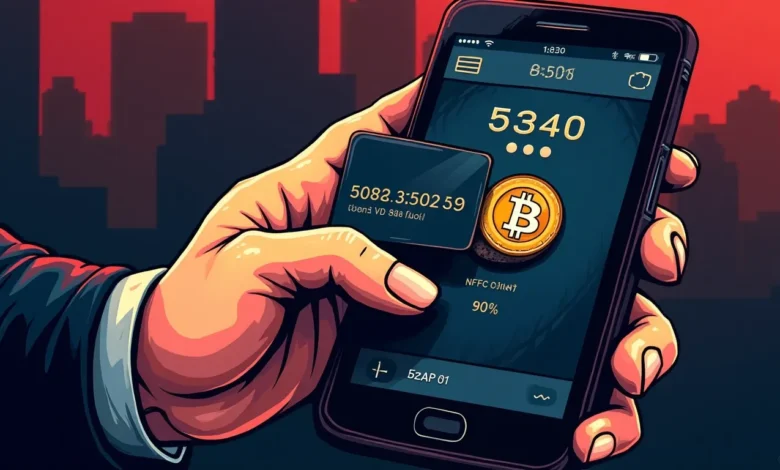
Tangem advertises a $59.90 two-card hardware wallet with NFC signing, EAL6+ secure element protection, and support for 87+ blockchain networks. For an allocator managing yield positions across Ethereum L2s, Solana, and EVM chains, the promise is simple: hardware-level security without the USB dependency, screen complexity, or battery management that Ledger requires. The workflow is straightforward. You open the Tangem app on your phone, tap the card to your device, and sign the transaction. The private key never leaves the secure element chip, the card requires no battery or charging, and the backup card model eliminates seed phrase storage risk.
The question worth answering is whether that model works when you are rebalancing eight positions weekly across Aave, Curve, and cross-chain bridges. The answer depends on three factors: whether you can verify transactions independently of your phone screen, whether WalletConnect routing supports the protocols you use, and whether the card-only backup model introduces single points of failure that outweigh the seed phrase risk it removes. Every hardware wallet makes a trade-off between security, usability, and operational resilience. Tangem’s trade-off is specific. It removes the supply chain and firmware update attack surface that Ledger and Trezor carry, but it transfers transaction verification responsibility to your phone and locks your recovery mechanism to physical card possession rather than memorizable seed words.
The Monetary History Of Verification

The 2013 Cyprus banking crisis produced a lesson most hardware wallet reviewers ignore. When Cypriot banks reopened after a two-week closure, depositors discovered that the account balances displayed on ATM screens did not match the balances the banks had actually debited. The screen showed one number. The ledger recorded another. The difference was a function of the emergency levy the Troika had imposed on deposits over 100,000 euros, but the ATMs had not been reprogrammed to reflect the new reality. For three days, Cypriots withdrew cash based on incorrect balance information, until the banks corrected the display logic and the real losses became visible.
The structural problem was not the levy itself. It was the assumption that the screen could be trusted to represent the ledger accurately. When the two diverged, depositors had no independent method of verification. They could not call the central bank and confirm their balance. They could not inspect the underlying database. They relied entirely on the interface the bank provided, and when that interface misrepresented the state of their funds, they had no recourse until the error was corrected.
Tangem’s card model creates the same dependency. The card has no screen. Transaction details such as recipient address, token amount, gas limit, and contract interaction parameters are displayed only on your phone. You are trusting your phone’s screen to accurately represent what the card is being asked to sign. If malware on your phone alters the displayed transaction while passing a different transaction to the secure element for signing, you will approve a transfer you did not intend. The card will sign what it receives. You will see what the phone shows you. If those two things differ, you will not know until the transaction confirms on-chain and the funds are gone.
This is not a theoretical concern. In 2022, a targeted Android malware campaign compromised over 300,000 devices by injecting overlay screens into legitimate banking apps. The user saw a transfer to their savings account. The phone sent a transfer to an attacker-controlled wallet. The attack succeeded because the verification step relied entirely on the phone’s display, with no independent confirmation mechanism. Tangem’s model operates the same way. The secure element protects the private key. The phone controls what you see. If the phone is compromised, the card will still sign correctly, but the transaction it signs will not be the one you approved.
Transaction Speed, DApp Compatibility, And The WalletConnect Dependency
Tangem supports 87+ blockchain networks and over 16,000 cryptocurrencies, including Bitcoin, Ethereum, Solana, Polygon, Arbitrum, Optimism, Base, Avalanche, BNB Chain, Cardano, XRP, TON, and Cosmos. Native staking is available for SOL, TRX, ATOM, POL, BNB, ADA, and TON directly in the app, meaning you can deploy staking positions without leaving the Tangem interface. For cross-chain rebalancing, WalletConnect integration routes Tangem to thousands of dApps across Solana and 40+ EVM networks, including DEXs like Uniswap and PancakeSwap, lending protocols like Aave and Compound, liquid staking on Lido, and NFT marketplaces.
The limitation is that Tangem’s supported dApp list is narrower than its asset storage list. The wallet can hold tokens on 87 chains, but WalletConnect routing determines which protocols you can actually interact with. For allocators running positions on newer L2s or niche yield aggregators, this creates dependency on WalletConnect’s integration roadmap rather than Tangem’s native development. If the protocol you use does not support WalletConnect, or if WalletConnect’s connection logic introduces latency or dropout during time-sensitive bridge transactions, you cannot complete the position from Tangem. You would need to export your private key, which defeats the purpose of hardware isolation, or maintain a secondary wallet for protocols Tangem cannot reach.
Transaction speed is limited by NFC communication rather than card processing. The Samsung-manufactured EAL6+ secure element chip processes signing requests quickly, but NFC handshake and encrypted channel setup add 2-5 seconds per transaction compared to USB or Bluetooth. For single transactions, this is immaterial. For weekly rebalancing across eight positions involving approve-then-deposit flows, the cumulative friction is 15-30 additional seconds per session. The larger operational issue is NFC reliability. Older phones with finicky NFC antennas may require multiple tap attempts to establish the connection, and interruptions mid-signature can leave transactions in an uncertain state where the card has signed but the phone has not broadcast, requiring manual chain inspection to confirm status.
Ledger avoids this by using USB or Bluetooth with a hardware screen that confirms transaction details before signing. MetaMask avoids it by keeping keys in software and signing instantly, at the cost of hot wallet exposure. Tangem’s trade-off is hardware isolation without the desktop client dependency, but the phone becomes the single point of failure for both display verification and connection stability. If your phone’s NFC fails during a bridge transaction, you cannot switch to desktop. If your phone is compromised by display malware, the card will still sign correctly, but you will not know what you signed until it executes.
Backup Card Mechanics And The Total Loss Scenario
Tangem uses backup cards instead of a 12- or 24-word seed phrase. When you initialize a Tangem wallet, the secure element generates a private key and writes it to the primary card and any backup cards you purchased. The cards are linked. If you lose the primary card, you tap the backup card and regain access to the same wallet. The private key never exists outside the secure element chips, meaning there is no seed phrase to write down, store in a safe, or expose to phishing attacks.
The structural advantage is that seed phrase phishing is eliminated entirely. The most common hardware wallet compromise is not firmware exploit or supply chain tampering. It is users entering their seed phrase into a fake recovery website and handing their keys to an attacker. Tangem removes that attack surface. The key exists only on the cards. If you do not have a card, you cannot access the wallet. If you do have a card, you do not need to know any words or pass any authentication beyond physical possession.
The structural risk is total loss. If you lose all your cards, your funds are gone permanently. There is no recovery mechanism, no customer support override, no way to regenerate the key from memory or documentation. The $59.90 two-card set provides one backup. The $69.90 three-card set provides two. For allocators managing significant capital, the operational question is whether geographic distribution of backup cards is feasible and whether the storage locations remain accessible under the conditions that would cause you to need them. If you keep one card in your wallet and one card in your home safe, and your home burns down while you are traveling, you still have the card in your wallet. If you keep all three cards in the same location and that location is compromised, you lose everything.
Compare this to Ledger’s seed phrase model. If you lose your Ledger device, you can buy a new one and restore the wallet using the 24-word seed. If you lose the seed phrase but still have the device, you can extract the funds by creating a new wallet and transferring them. If you lose both, you are in the same total loss scenario as losing all Tangem cards, but the probability of simultaneous loss is lower because the device and the seed phrase are stored separately by design. Tangem’s model collapses that separation. The card is both the device and the seed. Losing all copies means losing the key itself.
For yield allocators, the practical implication is that geographically distributed backup storage is not optional. One card in your possession, one card in a secure offsite location, and ideally a third card with a trusted individual or institutional custodian. The additional $10 for a third card improves resilience, but only if the third card is stored separately and remains accessible when you need it. If all three cards are in the same safe, you have not reduced your single point of failure. You have simply paid $10 for redundancy that does not function under the failure mode it was meant to address.
Firmware Immutability: Non-Updatable Security
Tangem’s firmware is factory-installed and cannot be updated after production. The secure element chip is programmed during manufacturing, and the configuration is locked permanently. Independent audits by Kudelski Security in 2018, Riscure in 2023, and Cure53 in 2026 reviewed the firmware before it was locked, meaning the code running on your card has been externally verified, but the firmware itself is closed-source. You cannot inspect what the chip is executing. You can only trust the auditors’ conclusions and Tangem’s claims about what the chip does.
The advantage is that firmware update attacks are impossible. Ledger and Trezor allow firmware updates, which means they also allow malicious firmware to be pushed remotely if an attacker compromises the update server or the signing keys. Tangem eliminates that vector entirely. The firmware cannot be modified post-sale. If an attacker gains access to Tangem’s infrastructure, they cannot push a backdoored update to your card. The only attack surface is the firmware as it was shipped, and that firmware has been externally audited.
The disadvantage is that the firmware cannot be patched either. If a vulnerability is discovered in Tangem’s signing logic for a specific chain or contract type, the company cannot issue a fix. They can update the phone app, which controls transaction construction and WalletConnect routing, but they cannot change how the secure element processes signatures. For long-term positions held for months or years, this introduces the risk that a chain upgrade or protocol change will expose a signing vulnerability that Tangem cannot address without issuing new hardware.
Ledger and Trezor accept the update risk because they consider patchability more important than immutability. Tangem makes the opposite trade-off. For allocators managing active yield positions, the practical question is whether the protocols you use are likely to introduce breaking changes that require firmware-level support. If you are running positions on mature chains like Ethereum and Solana with stable signing standards, non-updatable firmware is low risk. If you are deploying to newer L2s or experimental contract standards, the inability to patch the card increases the probability that you will eventually need to migrate to a different wallet because Tangem cannot support the updated signing flow.
Ledger offers hardware-screen transaction verification, desktop client support, and updatable firmware, at the cost of higher price, USB/Bluetooth attack surface, and seed phrase management. Tangem offers NFC-only signing, non-updatable firmware, and card-based recovery, at the cost of phone-screen dependency, mobile-only workflow, and total loss if all cards are misplaced. MetaMask offers instant signing and broad dApp compatibility, at the cost of hot wallet exposure and no hardware isolation unless paired with a Ledger or Trezor backend.
For allocators managing eight positions weekly, the decision depends on where you are willing to accept operational friction and where you need independent verification. If you are rebalancing from a desktop and need to verify contract interactions on a hardware screen before signing, Ledger is the correct choice. The Ledger Nano X costs $149, supports desktop and mobile, and displays transaction details on the device itself, eliminating phone-screen trust dependency. The seed phrase introduces phishing risk, but geographic distribution of metal backups mitigates total loss exposure. The firmware is updatable, meaning Ledger can patch vulnerabilities or add support for new chains, but that also means firmware update attacks are possible if Ledger’s signing keys are compromised.
If you are rebalancing from mobile and prioritize elimination of seed phrase risk over independent transaction verification, Tangem is the correct choice. The $59.90 two-card set is the lowest-cost hardware wallet with EAL6+ secure element protection, and the card-based recovery model removes the seed phrase attack surface entirely. The phone-screen dependency is the trade-off. You must trust that your phone is not compromised, because the card has no screen to verify transactions independently. For allocators who maintain strict phone security, run dedicated devices for wallet operations, and can implement geographic distribution of backup cards, Tangem’s model works. For allocators who cannot guarantee phone integrity or who need desktop workflows, it does not.
If you are running positions that require rapid transaction iteration, complex multi-sig setups, or protocols with limited WalletConnect support, MetaMask paired with a hardware wallet backend is the correct choice. MetaMask maintains the broadest dApp compatibility, supports transaction simulation through Tenderly and Blocknative integrations, and allows switching between hot wallet and hardware signing depending on transaction sensitivity. The hot wallet mode exposes keys to software exploits, but for small test transactions or gas-only wallets, that exposure is acceptable. The hardware mode requires Ledger or Trezor, meaning you accept seed phrase risk and firmware update surface in exchange for desktop verification and multi-sig orchestration that Tangem cannot provide.
Who Tangem Is Right For, And Who It Is Not
Tangem is right for mobile-first allocators who prioritize seed phrase elimination over transaction screen verification, who can implement geographic distribution of backup cards, and whose positions are concentrated on chains and protocols with mature WalletConnect support. If you are managing stablecoin positions on Aave, LP positions on Uniswap or Curve, and native staking on Solana or Cosmos, and you are rebalancing from your phone rather than desktop, Tangem delivers hardware isolation at $59.90 without the complexity of USB cables, battery management, or seed phrase storage. The card-based recovery model works if you treat the backup cards as you would treat gold bars: geographically distributed, physically secured, and accessible only to you or a trusted party.
Tangem is not right for allocators who need desktop workflows, who require independent transaction verification on a hardware screen, or whose positions depend on protocols with limited WalletConnect integration. If you are managing multi-sig vaults, deploying to experimental L2s, or running positions on protocols that do not support WalletConnect routing, Tangem cannot reach those positions without exporting your key, which defeats hardware isolation. If you cannot guarantee phone security, or if your threat model includes targeted malware that could compromise your phone’s display layer, the absence of a hardware screen is disqualifying. If you are managing capital where total loss from misplacing all backup cards is unacceptable, seed phrase recovery despite its phishing risk is the safer model.
For allocators running eight positions weekly, the operational question is whether WalletConnect latency and NFC handshake delays introduce enough friction to offset the convenience of mobile-only signing. The answer depends on your transaction volume and tolerance for 2-5 second delays per signature. If you are rebalancing once per week with approve-then-deposit flows, the cumulative delay is 15-30 seconds, which is immaterial. If you are executing rapid arbitrage or responding to liquidation alerts, the delay is long enough to miss execution windows, and MetaMask’s instant signing becomes necessary despite hot wallet exposure.
The Recommendation
For yield allocators managing positions across Ethereum L2s, Solana, and EVM chains from mobile, Tangem is the correct hardware wallet if you can implement geographic distribution of backup cards and your positions are on protocols with WalletConnect support. The $59.90 entry price, EAL6+ secure element, and seed phrase elimination make it the lowest-friction hardware wallet for mobile workflows. The phone-screen dependency is the trade-off. If your threat model includes phone compromise, or if you need desktop workflows and hardware-screen verification, Ledger’s higher price and seed phrase risk are worth accepting for the independent verification layer.
The specific decision rule is this: if losing all your backup cards would result in acceptable loss, or if you can store backup cards in geographically separate locations that remain accessible under the conditions that would cause you to need them, Tangem works. If neither condition is true, the total loss risk outweighs the seed phrase risk that Ledger’s model carries, and Ledger is the safer choice despite higher cost and greater operational complexity. The mechanism you choose matters less than the backup procedure you implement. Hardware isolation protects your key from remote exploits. It does not protect your funds from physical loss or phone-layer malware. Those protections require operational discipline that no hardware wallet can enforce.
The Takeaway
Tangem’s $59.90 card-based hardware wallet eliminates seed phrase phishing risk and delivers EAL6+ secure element protection in a mobile-first form factor, but the absence of a transaction screen transfers verification responsibility to your phone, and total loss of all backup cards results in permanent fund loss with no recovery mechanism. For allocators managing yield positions across chains, the decision depends on whether you can implement geographic distribution of backup cards, whether your positions are on protocols with WalletConnect support, and whether your phone security posture justifies trusting the phone’s display layer to represent transaction details accurately. The single point of failure is not the card. It is the storage and verification assumptions the card model requires you to implement correctly, every time, without exception.
Frequently Asked Questions
Does Tangem work with desktop computers or only mobile phones?
Tangem requires an NFC-enabled smartphone and has no desktop client or USB connectivity. If you need desktop workflows for managing DeFi positions, yield rebalancing, or multi-sig operations, Ledger or Trezor with desktop support is the correct choice. Tangem is mobile-only by design, which eliminates USB attack surface but also removes the ability to sign transactions from a computer.
What happens if I lose all my Tangem backup cards?
If you lose all Tangem cards, your funds are permanently lost with no recovery mechanism. Tangem does not use seed phrases, meaning there is no 12- or 24-word backup to restore your wallet. The $59.90 two-card set provides one backup, and the $69.90 three-card set provides two. Geographic distribution of backup cards in separate secure locations is not optional for managing significant capital. Unlike Ledger’s seed phrase model, Tangem’s card-only recovery introduces total loss risk if all physical cards are misplaced or destroyed.
Can Tangem verify transaction details independently of my phone?
No. Tangem cards have no screen, so all transaction details including recipient address, token amount, and contract interactions are displayed only on your phone. You are trusting your phone’s screen to accurately represent what the card is signing. If malware on your phone alters the displayed transaction while passing a different transaction to the secure element, the card will sign the malicious transaction. Ledger and Trezor avoid this by displaying transaction details on the hardware device itself, providing independent verification that does not depend on phone or computer security.
How does Tangem compare to Ledger for managing DeFi yield positions?
Tangem costs $59.90 for a two-card set and eliminates seed phrase risk, but requires mobile-only workflows and has no transaction screen for independent verification. Ledger costs $149 for the Nano X, supports desktop and mobile, and displays transaction details on the device screen, but introduces seed phrase phishing risk and firmware update attack surface. For yield allocators who rebalance from mobile and can implement geographic distribution of Tangem backup cards, Tangem is lower cost and eliminates seed phrase exposure. For allocators who need desktop workflows, hardware-screen verification, or complex multi-sig setups, Ledger is the correct choice despite higher price.
Does Tangem support all DeFi protocols and cross-chain bridges?
Tangem supports 87+ blockchain networks for asset storage, but dApp compatibility depends on WalletConnect integration rather than Tangem’s native development. WalletConnect routes Tangem to thousands of dApps including Uniswap, Aave, Compound, and Lido, but if the protocol you use does not support WalletConnect, you cannot interact with it from Tangem without exporting your private key. For allocators managing positions on newer L2s or niche yield aggregators, verify WalletConnect support before deploying capital, because Tangem’s mobile-only model prevents fallback to desktop clients when WalletConnect routing fails.
Tool mentioned above
Ledger
Ledger devices display the full transaction on their own screen before you approve it, which is what stops an approval exploit at the point it matters.
We may earn a commission if you sign up through this link, at no cost to you. It does not change what gets recommended.
The Weekly Yield Report
You have just reviewed Tangem’s card model against Ledger and MetaMask for managing yield across eight protocols. The backup procedures and phone security assumptions required will be different next month.
Every Thursday: where crypto yield actually is – stablecoins, liquid staking and DeFi lending, with the risk named next to the rate and what changed since last week.
Free. No trade calls, no allocations, no hype. Unsubscribe in one
click.
Source link