


What You Will Accomplish

Within 48 hours you will have verified whether a new lending protocol meets the minimum security threshold to justify initial capital allocation. The framework applies contract audit validation, team wallet history analysis, oracle architecture review, admin key risk assessment, and position sizing math. This is not generic “do your own research” advice. This is the specific sequence of checks that separates legitimate yield from yield that exists only until the exploit happens.
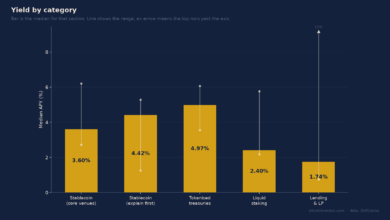
The income mechanism: Fluid currently offers USDC at 4.97% APY on Ethereum with $753 million TVL. Aave offers the same asset at approximately 3.8%. The difference on a $100,000 position is $1,170 annually. The question is whether that extra yield compensates for the additional risk of deploying capital into a protocol with less operational history than Aave or Compound. The only way to answer that question is to examine the specific architectural and governance features that determine exploit probability.
Prerequisites: You need the ability to read Etherscan contract pages, access to audit reports (either directly from audit firm websites or protocol documentation), and familiarity with multisig wallet structures. If you have never verified a contract address on Etherscan or read a security audit summary, complete those tasks on a known protocol like Aave before attempting this on a new one. The checklist assumes you can navigate GitHub repositories and cross-reference deployed contract addresses with audited code.
Step 1: Verify Contract Audit Quality and Code Deployment Match

Start with the protocol’s official documentation page listing security audits. Fluid’s audit page shows PeckShield pre-launch, StateMind, MixBytes for the Vault protocol, Cantina for the DEX protocol, and additional MixBytes and StateMind audits for the Liquidity Layer. The first verification is whether these audits are publicly accessible. If a protocol claims to have been audited but does not provide direct links to the full reports, that is an immediate disqualification. You cannot verify what you cannot read.
Download each audit report. Note the audit completion date and the specific commit hash or contract version audited. Then navigate to the deployed contract on Etherscan. For Fluid, the core Liquidity contract is at 0x6f40d4a6237c257fff2db00fa0510deeecd303eb. Verify the contract creation date. If the contract was deployed before the audit was completed, the audit does not cover the live code. If the contract was deployed weeks or months after the audit, check the protocol’s changelog or GitHub repository for any code changes made post-audit. Any modification to core logic after an audit expires the audit’s validity for that logic.
Cross-reference the audit findings with the deployed code. MixBytes flagged that no supply limit is enforced in certain Fluid modules. Check whether that issue was resolved in the live deployment or whether it remains an open risk. PeckShield identified multiple severity levels of findings in their pre-launch audit. Verify that high and critical findings were addressed. If the protocol launched with unresolved high-severity findings, that tells you how the team prioritizes security versus time-to-market.
The Fluid contracts repository on GitHub provides the source code for comparison. Match the deployed bytecode hash on Etherscan with the verified source code. If the contract is not verified on Etherscan, do not proceed. Unverified contracts mean you cannot confirm the deployed code matches what was audited, and that is a non-starter for capital allocation.
Step 2: Audit Firm Track Record and 2026 Exploit Categories

Not all audit firms carry equal weight. Trail of Bits, Spearbit, and Certora have track records of formal verification and adversarial testing that go beyond code review. MixBytes and StateMind, which audited Fluid, are credible but not top-tier. PeckShield has audited hundreds of protocols, but volume does not guarantee depth. The question is whether the audit firm has a history of catching the exploit categories that dominated 2026.
The top three exploit categories in 2026 were reentrancy attacks, access control flaws, and oracle manipulation. Reentrancy remains a persistent risk despite being well understood since the 2016 DAO hack. Access control flaws, particularly around admin functions and role-based permissions, accounted for a significant share of 2026 losses. Oracle manipulation, especially in protocols that read prices from on-chain AMMs without sufficient safeguards, has drained hundreds of millions.
Read the audit reports specifically for findings related to these three categories. Did the auditors test for reentrancy in all external calls? Did they verify that admin functions cannot be called by unauthorized addresses? Did they validate oracle price feed manipulation resistance? If the audit does not explicitly address these categories, the audit is incomplete regardless of how many pages it contains. Fluid’s architecture introduces oracle risk through its dual reliance on Chainlink price feeds and on-chain AMM state reading. The StateMind and MixBytes audits should have tested whether simultaneous manipulation of both sources could produce mispriced collateral. Confirm that they did.
Step 3: Team History and Wallet Tracking
Fluid was built by the Instadapp team, which has over four years of experience managing DeFi infrastructure with several billion dollars in TVL. That history is verifiable. Navigate to Instadapp’s previous protocol deployments and check their operational record. Have there been exploits? If so, how did the team respond? Rapid disclosure, user compensation, and post-mortem transparency are positive signals. Silence, blame-shifting, or delayed communication are disqualifying.
Identify the multisig signers for the protocol’s admin functions. Fluid’s admin module allows certain privileged operations, including setting supply limits, pausing swaps, and arbitraging between pools. These functions are accessible only via the main module using the _onlyDelegateCall modifier, which is a security design that prevents direct external calls. But the multisig signers themselves remain a single point of failure if compromised. Cross-reference the signer addresses with their public records. Do they have ENS names? Have they been associated with previous projects? Are they anonymous or pseudonymous?
In May 2026, Fluid suffered a key compromise affecting its off-chain merkle rewards distribution infrastructure. Approximately 125,000 FLUID tokens and 51,900 GHO were drained, with the attacker funneling ETH into Tornado Cash. The core protocol remained secure, and user funds were not affected. But the incident demonstrates that security extends beyond smart contract code. Off-chain infrastructure, including private keys for rewards distribution, multisig signers, and oracle operators, all present attack surfaces. Check whether the team rotated admin keys after the May incident. Look for batched transactions on Etherscan that remove and add proposer or approver roles, which indicates compromised key remediation.
Step 4: Oracle Setup Risk and Manipulation Resistance
Fluid uses Chainlink for token prices and reads AMM state on-chain. The combination introduces a specific risk: if both the Chainlink price feed and the on-chain AMM state can be manipulated simultaneously, the protocol will accept mispriced collateral. Chainlink feeds are generally manipulation-resistant, but they are not immune to staleness or outlier reporting. On-chain AMM prices can be manipulated through flash loans or large trades that temporarily distort pool ratios.
Verify the oracle configuration parameters. Check the Chainlink feed’s heartbeat interval, which determines how often the price updates. For volatile assets, a heartbeat longer than 30 minutes introduces staleness risk. Check whether Fluid enforces a maximum price change per update. A feed that allows a 50% price jump in a single update can be exploited if an attacker can manipulate the feed or if the feed itself malfunctions.
For the on-chain AMM price reading, verify the TWAP (time-weighted average price) window length. A TWAP window shorter than 10 minutes is vulnerable to flash loan manipulation. A TWAP window longer than 30 minutes introduces staleness during high volatility. Confirm that the protocol requires minimum on-chain liquidity before accepting AMM prices. If the AMM pool has only $10,000 in liquidity, a small trade can move the price significantly, and the protocol should reject that price source.
Read the audit reports for oracle-specific findings. Did the auditors simulate a dual manipulation scenario where both Chainlink and the AMM are compromised? If not, that scenario remains untested. The absence of a finding does not mean the risk does not exist; it means the auditors did not test for it. Fluid’s smart collateral design, which lets LP positions act as both collateral and earning assets, increases oracle sensitivity. A mispriced LP token can result in over-collateralized borrowing, which drains the protocol. Confirm that the auditors tested LP token pricing under adversarial conditions.
Step 5: Admin Key Risk and Governance Control Assessment
Admin keys determine whether a protocol is trustless or trust-minimized. Fluid’s admin module, accessible only via the _onlyDelegateCall modifier, restricts admin functions to a specific module that delegates to the ADMIN_IMPLEMENTATION. This is a more secure design than protocols that expose admin functions directly to externally-owned accounts. But the multisig signers who control that ADMIN_IMPLEMENTATION remain a trust assumption.
Check the multisig threshold and signer count. A 3-of-5 multisig is less secure than a 5-of-9. A 2-of-3 multisig is a single point of failure if two signers collude or are compromised. Identify whether the signers are geographically distributed, whether they use hardware wallets, and whether they have published a security policy for key management. If this information is not public, ask in the protocol’s Discord or governance forum. The absence of transparency around multisig operations is a red flag.
Verify whether the admin module includes time-lock constraints. A time-lock requires that any admin action be announced publicly before execution, giving users time to exit if they disagree. Fluid’s documentation does not specify whether admin actions are time-locked. If they are not, the multisig signers can execute changes immediately, including parameter adjustments that could disadvantage existing depositors. Morpho’s governance structure, for comparison, separates immutable markets from curated vaults, making explicit who sets risk parameters and under what constraints.
Review the scope of admin functions. Can the multisig pause deposits? Can it upgrade contract logic? Can it change oracle sources? Each of these capabilities introduces a risk that users must trust the multisig to exercise responsibly. Protocols that minimize admin privileges, or that lock certain parameters permanently, reduce trust assumptions. Protocols that retain broad admin control require users to trust the team’s judgment indefinitely.
Step 6: Initial Capital Allocation Sizing and Phased Deployment
Even after completing the first five steps, initial capital allocation into a new protocol should be sized conservatively. Fluid’s TVL has grown to $985 million across Ethereum, Arbitrum, Plasma, Base, and Polygon. That scale suggests product-market fit, but rapid TVL growth can also indicate underappreciated risk. The 4x year-over-year TVL growth reported as of April 2026 occurred during a period when yields across DeFi compressed, pushing allocators toward newer protocols offering higher rates.
The smart collateral architecture that allows LP positions to earn yield while serving as collateral is a more complex design than Aave or Compound, where collateral sits idle. Complexity increases the attack surface. Fluid’s combined lending-DEX architecture introduces correlated risk: a bug in the DEX can affect lending depositors via the shared Liquidity Layer. This is structural, not containment risk. Aave isolates lending markets by asset. Fluid integrates them, which improves capital efficiency but increases contagion risk.
Size your initial position to reflect the protocol’s operational history. A protocol live for six months should receive a smaller allocation than one live for three years. A protocol with one audit should receive a smaller allocation than one with five. A protocol with anonymous founders should receive a smaller allocation than one with a public, verifiable team. For Fluid, built by the Instadapp team with over four years of operational history and multiple audits, an initial allocation of 5-10% of your total stablecoin lending capital is defensible. For a protocol with less history, 2-5% is more appropriate.
Check whether the protocol implements capital caps during the launch phase. A phased rollout with initial deposit limits signals that the team prioritizes security over growth. Fluid’s documentation does not specify whether it used deposit caps at launch, but the fact that TVL grew rapidly without reported exploits (except the off-chain rewards key compromise) suggests the core contracts have withstood real-world stress. Still, absence of an exploit is not proof of security. It is proof that no one has found the exploit yet.
Common Failure Modes and What They Look Like
The most common failure in protocol vetting is conflating audit quantity with audit quality. Five audits from low-tier firms provide less assurance than one audit from Trail of Bits or Certora. The second most common failure is ignoring the time gap between audit completion and contract deployment. Code changes made after an audit are unaudited code, and unaudited code is untrusted code.
The third failure is assuming that high TVL equals safety. Terra Luna reached $18 billion TVL before collapsing. High TVL signals market confidence, but market confidence can be wrong, especially when yields are attractive enough to override risk assessment. The fourth failure is not tracking admin key changes after a security incident. The May 2026 Fluid key compromise was contained, but only if the team rotated the compromised keys afterward. If they did not, the attacker retains access.
The fifth failure is underestimating oracle risk in protocols that combine multiple price sources. Chainlink alone is reliable. On-chain AMMs alone can be reliable if properly configured. Combining them without adequate safeguards creates a new risk that is greater than the sum of the parts. If the audit reports do not test for dual oracle manipulation, assume that scenario is exploitable until proven otherwise.
What To Do Next
After completing the 48-hour checklist, you have one of three outcomes. First, the protocol passes all checks, and you allocate a conservative initial position sized to reflect its operational history and code maturity. Second, the protocol fails one or more critical checks (unverified contracts, unresolved high-severity audit findings, anonymous multisig signers, no oracle manipulation testing), and you do not allocate. Third, the protocol passes most checks but has one or two moderate concerns, and you allocate a smaller position than you would to an established protocol, then monitor closely for the first 90 days.
For Fluid specifically, the checklist yields a pass with moderate concerns. The Instadapp team’s operational history is strong. The audits are public and conducted by credible firms, though not top-tier. The May 2026 off-chain key compromise was contained, but it demonstrates that infrastructure security extends beyond contract code. The oracle architecture introduces dual-source manipulation risk that may not have been fully tested. The combined lending-DEX design increases complexity and correlated risk compared to isolated lending markets.
An initial allocation of 5-10% of stablecoin lending capital is defensible, with ongoing monitoring of admin key transactions, TVL growth patterns, and whether any new audit findings emerge as the protocol matures. Track the protocol’s 30-day fee generation, currently reported at $3.63 million, against TVL. Declining fees relative to TVL signal that yield is being subsidized rather than earned, which is unsustainable. Rising fees relative to TVL signal genuine protocol revenue, which supports yield sustainability.
Set specific exit triggers before allocating. If TVL drops by more than 30% in a week, exit. If a new high-severity audit finding is disclosed, exit. If multisig signers change without public explanation, exit. If the yield on your position drops below the rate offered by established protocols like Aave or Compound, reassess whether the additional complexity and operational risk remain justified. The point of the 48-hour checklist is not to eliminate risk. It is to understand the specific risks you are accepting in exchange for the specific yield premium you are being paid.
The Takeaway
You now have the repeatable framework to vet new lending protocols before allocating capital. The five steps (contract audit validation, team wallet history, oracle configuration review, admin key risk assessment, and position sizing) apply to any protocol, not just Fluid. The May 2026 key compromise and the protocol’s rapid TVL growth demonstrate that operational security and code security are separate concerns, both of which require verification. The income opportunity, an extra 1.2 percentage points on $100,000, is worth $1,200 annually if the protocol remains solvent and worth negative $100,000 if it does not. The difference between those outcomes is determined by the checks you complete in the 48 hours before you deploy.
The eurozone discovered between 2010 and 2012 that yields on sovereign debt reflected default probability rather than return of principal. Greek bonds paid 25% at one point, which looked like extraordinary income until the restructuring disclosed that the yield had been a loss accruing all along. Every DeFi yield has the same question embedded in it. Where does the money actually come from, and what happens when it stops? The 48-hour checklist answers that question before you find out the expensive way.
Frequently Asked Questions
What is the minimum audit requirement before allocating to a new DeFi lending protocol?
At minimum, the protocol must have one completed audit from a credible firm (MixBytes, StateMind, PeckShield, or better) covering the deployed contract code, with all high and critical findings resolved. The audit report must be publicly accessible, and the deployed contract must be verified on Etherscan with bytecode matching the audited source. Unverified contracts or audits that predate the deployed code are disqualifying.
How do I verify that a protocol’s deployed contract matches the audited code?
Navigate to the contract address on Etherscan and confirm the contract is verified, meaning source code is visible. Check the contract creation date against the audit completion date in the audit report. Download the audit and locate the specific commit hash or version number audited. Compare that version to the verified source on Etherscan. If the protocol provides a GitHub repository, cross-reference the deployed bytecode hash with the repository code at the audited commit.
What specific oracle risks should I check in a new lending protocol?
Verify the oracle price feed source (Chainlink is standard), heartbeat interval (under 30 minutes for volatile assets), maximum price change per update (to prevent outlier acceptance), and staleness handling. For protocols reading on-chain AMM prices, confirm TWAP window length (minimum 10 minutes), minimum liquidity requirements before accepting AMM prices, and whether auditors tested dual manipulation scenarios where both Chainlink and the AMM are compromised simultaneously.
How much should I allocate to a new protocol that passes all security checks?
Size initial allocation based on operational history and code maturity. A protocol live for six months with one audit should receive 2-5% of your total stablecoin lending capital. A protocol live for two years with multiple audits and a public team with prior DeFi experience can justify 5-10%. Never allocate more than 10% to a protocol with less than one year of operational history, regardless of audit count or TVL.
What are the immediate exit triggers after allocating to a new lending protocol?
Set three non-negotiable exit triggers before deploying capital. First, TVL decline exceeding 30% in one week signals potential exploit or loss of confidence. Second, disclosure of a new high or critical severity audit finding requires immediate exit. Third, unexplained multisig signer changes indicate potential key compromise. Additionally, if yield drops below established protocol rates (Aave, Compound), reassess whether the additional risk remains justified by the return.
The Weekly Yield Report
You have just verified six security checks spanning contract audits, team history, oracle configuration, admin keys, and capital sizing. Those parameters will change with every new protocol you evaluate.
Every Thursday: where crypto yield actually is – stablecoins, liquid staking and DeFi lending, with the risk named next to the rate and what changed since last week.
Free. No trade calls, no allocations, no hype. Unsubscribe in one
click.
Source link