



Aave V4 on Base launched its Equities Hub on Friday, September 25, allowing eligible non-U.S. users to borrow USDC against seven Coinbase-issued tokenized stocks tracking Apple, Amazon, Alphabet, Meta, Microsoft, Nvidia, and Tesla. The market opened with a $29 million collateral cap across the seven stocks, a $32 million USDC supply cap, and a $21 million USDC borrow cap. AAVE traded at $154.33, up 6.37% over the 24 hours following the announcement.
Aave founder Stani Kulechov framed the launch as a transformation: “Until now a tokenized stock was something you could hold or trade. Today it becomes something you can borrow against.” That framing is correct for the users who can access this product. For the users who cannot, the launch confirms a pattern that has defined DeFi lending for years – the infrastructure that enables borrowing against dollar-denominated assets is being built for the people who need it least.
What the Equities Hub Actually Enables

The structure is straightforward. Eligible users outside the United States deposit tokenized shares of seven large-cap U.S. technology companies as collateral. Against that collateral, they borrow USDC. The borrowed USDC can then be deployed elsewhere – into yield strategies, into other DeFi protocols, or converted to local currency if the user needs liquidity without selling their equity position.
This is useful if you hold U.S. equities, trust Coinbase’s tokenization process, have access to Base, meet the eligibility criteria for non-U.S. borrowing, and want to maintain exposure to those equities while accessing dollar liquidity. That describes a specific user: someone who already holds dollar-denominated assets and wants to leverage them without triggering a taxable sale.
It does not describe the user base that has driven the most sustained real-world adoption of stablecoin borrowing over the past four years. That user base – concentrated in Turkey, Argentina, Nigeria, Lebanon, and parts of Southeast Asia – does not need a way to borrow dollars against their Tesla shares. They need a way to borrow dollars, full stop, and they do not have Tesla shares to post as collateral.
The Jurisdictional Filter That Defines the User Base
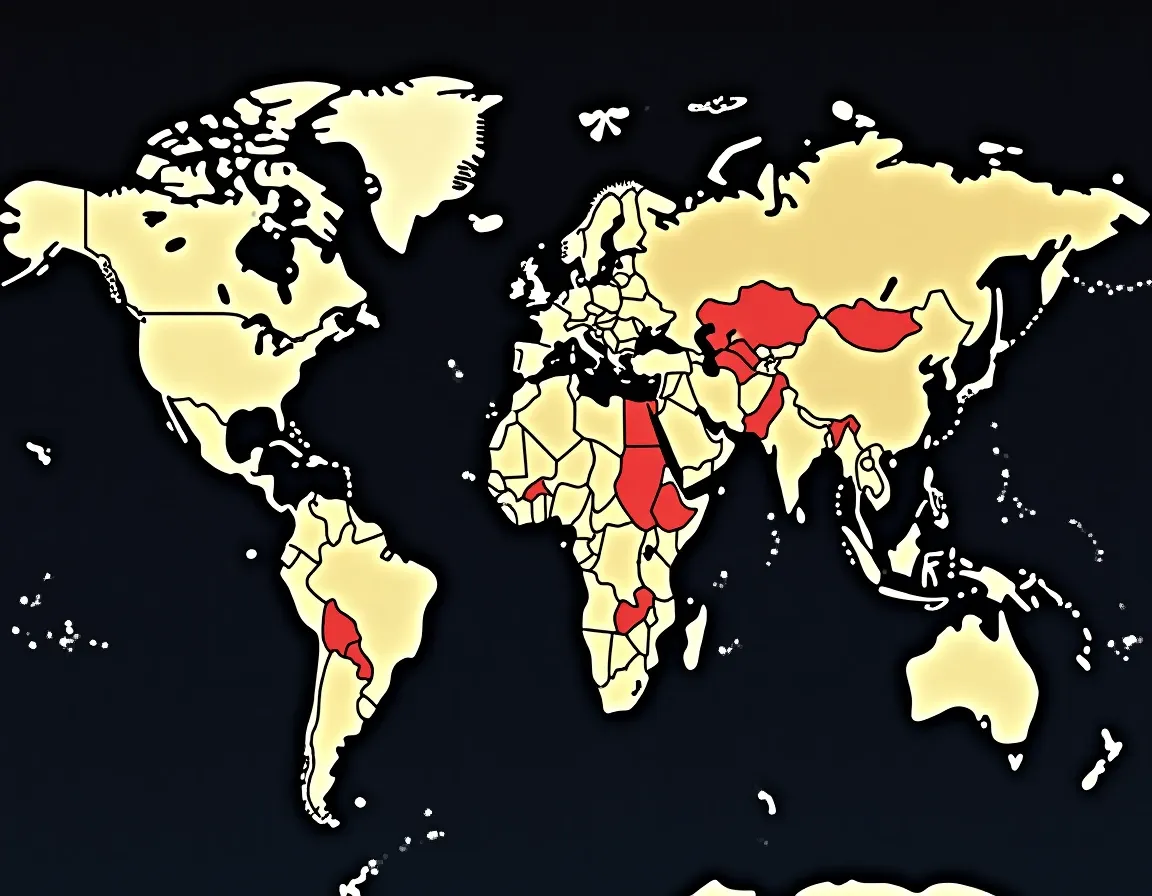
The Equities Hub is available to “eligible non-U.S. users in permitted jurisdictions.” That phrasing, common in DeFi products touching regulated securities, excludes two groups. The first is U.S. users, for obvious regulatory reasons. The second is users in jurisdictions where tokenized securities cannot be legally offered or where the compliance burden makes access unworkable.
That second group includes most of the markets where stablecoin credit demand is highest. Argentina’s securities regulator, the CNV, has not approved tokenized U.S. equities for retail use. Nigeria’s SEC has made clear that crypto-based securities offerings require explicit authorization that has not been granted. Turkey’s Capital Markets Board has similarly restricted access to foreign securities not traded on approved exchanges. Lebanon’s financial sector, still recovering from the 2019 banking collapse, has no framework for onchain asset custody or tokenized securities.
The result is that the Equities Hub is accessible primarily to users in jurisdictions with mature regulatory frameworks for digital assets and securities – the European Union under MiCA, Singapore, parts of the Middle East with clear crypto licensing regimes. These are not the jurisdictions where stablecoin borrowing has the highest utility. These are the jurisdictions where users already have access to dollar credit through traditional banking channels.
What Emerging Market Users Actually Need from DeFi Lending
In Buenos Aires, a graphic designer earning peso income does not need to borrow against her Apple shares. She needs to borrow dollars to pay for software subscriptions that are priced in dollars, or to hold as savings while the peso devalues. She does not have U.S. equities to post as collateral. She has peso income, perhaps some USDT savings accumulated over months, and no access to dollar credit from Argentine banks under current capital controls.
In Lagos, a logistics coordinator moving goods across West Africa does not need leveraged exposure to Microsoft. He needs working capital in dollars to pay suppliers who will not accept naira. His collateral is not tokenized Tesla stock. His collateral is his transaction history, his stablecoin balance, and his reputation in the informal credit networks that have filled the gap left by Nigerian banks that ration dollar access.
In Beirut, a software developer who lost access to her bank account in 2019 does not need to borrow against Nvidia shares. She needs a credit line in USDC that she can draw against when client payments are delayed. Her income is in dollars, her expenses are in dollars, and her banking system is non-functional. She has no equity portfolio. She has her earning history and her stablecoin wallet.
The income story in these markets is not about leveraging existing dollar assets. It is about accessing dollar credit when you do not have dollar assets and your local banking system will not provide it. The Equities Hub solves a different problem for a different user.
Why DeFi Lending Infrastructure Is Being Built for the Wrong User
The reason leading DeFi protocols build products like the Equities Hub is not a mystery. The user who holds tokenized U.S. equities is a user who has already navigated securities onboarding, passed KYC with Coinbase, and has the capital base to hold large-cap U.S. stocks. That user is legible to compliance teams. That user’s collateral is legible to risk models. That user exists in a jurisdiction where the protocol can operate without ambiguity.
The user in Buenos Aires earning peso income is not legible in the same way. Her collateral is not a tokenized share with a real-time price feed. Her collateral is harder to model, harder to liquidate, and exists in a jurisdiction where the regulatory framework for crypto lending is unsettled. Building credit infrastructure for her is harder. It requires different collateral models, different risk pricing, and a willingness to operate in jurisdictions where the legal clarity is lower.
So DeFi protocols build for the user with tokenized equities, and the user in Buenos Aires continues to borrow dollars from informal P2P networks and local exchanges at interest rates that reflect the inefficiency of those markets. The infrastructure that could lower her borrowing costs and expand her access to dollar credit is being deployed elsewhere.
Projects That Are Building Toward Emerging Market Credit
There are projects attempting to solve the credit access problem for users without dollar-denominated collateral. These projects are smaller, less capitalized, and receive less attention than Aave’s institutional-grade product launches. But they are building the infrastructure that matters for the next billion stablecoin users.
Goldfinch, which launched its first credit pools in 2021, enables under-collateralized lending backed by borrower reputation and off-chain verification. Its largest pools have financed small and medium enterprises in Latin America, Southeast Asia, and Africa – borrowers who could not post tokenized Tesla stock if they wanted to. The yields on those pools have ranged between 12% and 18%, reflecting the higher risk and the higher demand for dollar credit in those markets.
Credix, operating primarily in Latin America, structures credit pools for regional borrowers with verified business cash flows. The collateral model is not onchain assets. It is receivables, inventory, and legal recourse structures enforceable in local jurisdictions. The borrowers are freight companies in Mexico, agricultural exporters in Brazil, and retailers in Colombia. None of them are posting tokenized Nvidia shares.
Maple Finance, which began with institutional credit and has since expanded to emerging market lending pools, routes capital to non-U.S. borrowers through delegate structures that assess credit risk off-chain. The model depends on trust in the delegate’s underwriting, but it enables lending to borrowers who do not fit DeFi’s standard over-collateralized model. The pools targeting Latin American and African borrowers have delivered yields between 10% and 15%, higher than dollar savings products available in those regions through traditional banks.
These protocols are not receiving the same attention as Aave’s Equities Hub. They are not moving $29 million in tokenized stock collateral. But they are routing real dollar credit to real users in the places where that credit has the highest marginal utility. They are building the income infrastructure that matters.
The Takeaway
Aave V4’s Equities Hub is a technically impressive product. It integrates tokenized securities into DeFi lending, expands the range of acceptable collateral, and signals institutional convergence between traditional finance and onchain credit. It does not expand access to dollar credit for the users who need it most. The users who need dollar credit most – in Buenos Aires, Lagos, Beirut, Istanbul, and Manila – do not have tokenized U.S. equities to post as collateral. They have peso income, naira savings, and lira deposits that are losing value. The DeFi lending infrastructure being built for them is smaller, less visible, and funded at a fraction of the capital flowing into products like the Equities Hub. That gap defines where the real income infrastructure work still needs to happen.
Frequently Asked Questions
What tokenized stocks can be used as collateral on Aave V4’s Equities Hub?
The Equities Hub launched with seven Coinbase-issued tokenized stocks tracking Apple, Amazon, Alphabet, Meta, Microsoft, Nvidia, and Tesla. The market opened with an initial collateral cap of approximately $29 million across these seven stocks, alongside a $32 million USDC supply cap and a $21 million USDC borrow cap. These stocks can be deposited as collateral by eligible non-U.S. users in permitted jurisdictions to borrow USDC against their equity positions.
Why can’t users in Argentina, Nigeria, or Turkey access Aave’s tokenized stock collateral feature?
Most high-inflation emerging markets lack regulatory frameworks that permit tokenized securities offerings to retail users. Argentina’s CNV has not approved tokenized U.S. equities for retail use, Nigeria’s SEC requires explicit authorization that has not been granted, and Turkey’s Capital Markets Board restricts access to foreign securities not traded on approved exchanges. The jurisdictional restrictions mean the Equities Hub is primarily accessible to users in regions with mature digital asset regulations, not the markets where stablecoin credit demand is highest.
Which DeFi protocols offer credit access to emerging market users without requiring dollar-denominated collateral?
Goldfinch enables under-collateralized lending backed by borrower reputation and off-chain verification, financing SMEs in Latin America, Southeast Asia, and Africa with yields between 12% and 18%. Credix structures credit pools for Latin American borrowers using receivables and inventory as collateral rather than onchain assets. Maple Finance routes capital to emerging market borrowers through delegate structures that assess off-chain credit risk, delivering yields between 10% and 15% to lenders in pools targeting Latin American and African markets.
What type of collateral do emerging market users actually have for DeFi borrowing?
Users in high-inflation economies typically hold local currency income, modest stablecoin savings accumulated over time, transaction histories, and informal reputation within P2P lending networks. A graphic designer in Buenos Aires earning peso income or a logistics coordinator in Lagos paid in naira does not have tokenized U.S. equities to post as collateral. Their credit needs center on accessing dollar liquidity to preserve purchasing power and pay for dollar-denominated goods and services, not leveraging existing dollar assets.
Why do DeFi protocols prioritize products like tokenized stock collateral over emerging market credit infrastructure?
Users who hold tokenized securities have already navigated KYC, passed compliance checks, and exist in jurisdictions with clear regulatory frameworks. Their collateral is easy to price and liquidate, making risk modeling straightforward. Emerging market users with local currency income and no dollar assets are harder to underwrite, their collateral is less liquid, and they operate in jurisdictions with unsettled regulatory frameworks. Building credit infrastructure for them requires different collateral models, higher risk tolerance, and more complex legal structures.
The Weekly Yield Report
You have just reviewed a $29 million collateral facility that excludes the users who need dollar credit most. The gap between DeFi infrastructure and emerging market demand will persist until capital flows differently.
Every Thursday: where crypto yield actually is – stablecoins, liquid staking and DeFi lending, with the risk named next to the rate and what changed since last week.
Free. No trade calls, no allocations, no hype. Unsubscribe in one
click.
Source link