

What NFT Royalties Are (And What They Never Were)
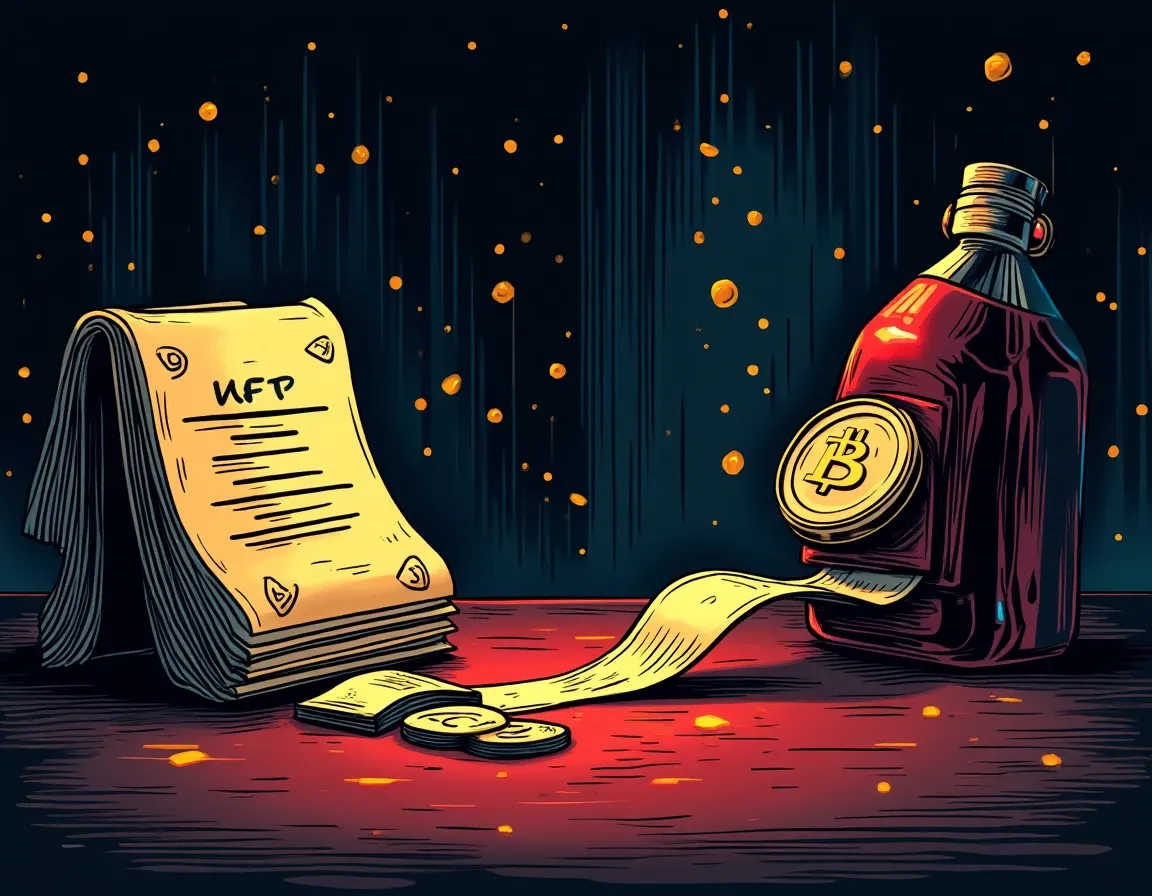
NFT royalties are secondary-sale payouts triggered automatically by smart contracts on each resale. The NFT creator sets a percentage, usually 5-10%, and the marketplace is supposed to deduct that amount from the seller’s proceeds and send it to the creator’s wallet.
That’s the theory. The reality is that NFT royalties were never actually enforced on-chain. The smart contract that minted the NFT doesn’t control what happens when someone transfers it. The blockchain cannot inherently distinguish between a sale that should pay royalties and a self-transfer or gift. This is a fundamental technical limitation, not a bug.
Instead, royalties rely on marketplace policy. The marketplace reads the royalty terms embedded in the NFT metadata or smart contract, calculates the creator fee, and routes the payment. If the marketplace chooses not to honor that term, the creator doesn’t get paid. There is no on-chain enforcement mechanism that blocks the transfer.
ERC-2981 is the Ethereum standard that defines how a smart contract signals royalty information. It provides a universal interface: royaltyInfo(tokenId, salePrice) returns the creator’s wallet address and the royalty amount. Marketplaces can read this function and honor the payment. But ERC-2981 does not enforce anything. It’s a suggestion, not a lock.
The result is that NFT royalty income depends entirely on which marketplace the NFT is sold through and what that marketplace’s policy was on the day of the sale. That policy has changed dramatically since 2022.
The 2023 Royalty War and What Survived

In late 2022, Blur launched with a 0.5% minimum royalty floor on immutable collections and largely optional royalties everywhere else. Blur’s value proposition was simple: lower friction for traders, which meant higher volume. Traders responded. Blur captured market share.
OpenSea, which had been the largest NFT marketplace and enforced creator royalties as default policy, tried to maintain royalty enforcement using its Operator Filter Registry, a smart contract tool that blocked transfers to non-royalty-enforcing marketplaces. This worked briefly. In August 2023, OpenSea phased out the Operator Filter Registry and made creator fees optional.
The incentive for marketplaces to drop NFT royalties is simple: it attracts traders who want greater profit margins on NFT resales. Marketplaces competed by lowering barriers, including removing mandatory royalty enforcement. The smart contract still could enforce royalties, but marketplace interfaces bypassed the check or allowed users to ignore it.
By early 2024, most high-volume NFT marketplaces had shifted to optional or minimal royalty models. The 2025-2026 stabilization shows rates near 6%, but enforcement remains inconsistent. Creator-focused platforms like SuperRare and Foundation still enforce royalties precisely because their collectors value them. This trades some liquidity for better royalty performance. The floor held, but only in specific venues.
Which Marketplaces Still Pay Royalties in 2026
Marketplace royalty policies vary by platform and by blockchain. Here’s what each major venue enforces as of Q1 2026:
Blur: 0% marketplace fee. 0.5% minimum royalty on immutable collections. Optional royalties on most other collections. Blur intentionally strips away creator royalties to offer raw liquidity for high-frequency flippers. In November 2025, Blur captured 66.3% market share of Ethereum NFT trading volume. Volume is high. Royalty compliance is not.
OpenSea: 0.5-2.5% marketplace fee. Royalties are optional. OpenSea reclaimed broader market share after its SEA token announcement in February 2025 drove its share from 25% to 71.5% overnight. OpenSea remains one of the largest marketplaces and is estimated to handle the lion’s share of royalty-enabled secondary trades, but only because some sellers choose to honor them. The platform no longer enforces.
Magic Eden: 2% marketplace fee. Royalty enforcement varies by chain. On Solana, Magic Eden handles 48% of NFT trade volume in Q1 2025. Solana collections earned $374K in weekly royalties, representing 55% of blockchain royalty share. Magic Eden’s policy is inconsistent across chains, but Solana enforcement is better than Ethereum.
SuperRare: 15% marketplace fee on primary sales. Enforces royalties natively. SuperRare is a curated art platform where collectors expect to pay royalties and view them as part of supporting creators. Volume is lower than Blur or OpenSea, but royalty compliance is near 100%.
Foundation and Zora: Both enforce royalties natively. Both are creator-focused platforms with lower trading volume but higher royalty reliability. If your goal is royalty income, these platforms are better venues than high-volume exchanges.
The pattern is consistent: curated art venues enforce royalties because their collectors value them. High-volume trading platforms make royalties optional to attract liquidity. You choose one or the other. You do not get both.
For more context on how NFT flipping works on these platforms, including the fee structures traders optimize for, see the full breakdown of marketplace arbitrage mechanics.
What NFT Creators Actually Earn From Royalties
Over 63% of NFT creators earned more from royalties on secondary sales than from initial mints. That statistic is from the 2021-2022 NFT boom and no longer represents the current environment. The royalty enforcement collapse changed the distribution.
In 2026, the median creator royalty income for the bottom 80% of collections remains below $1,000 per year. The long tail of thousands of smaller projects sees minimal secondary royalty income because volume is concentrated in a small number of blue-chip collections and most secondary sales now occur on platforms that do not enforce royalties.
Some gaming-NFT projects report that royalty income, after platform cuts, now makes up 20-30% of overall creator income. These are projects with active in-game utility where players are reselling NFTs frequently and the game’s marketplace enforces royalties. This is the exception, not the rule.
Optional royalty marketplaces increased buyer activity by 12% but lowered creator income by 18%. The net effect is higher volume with lower creator revenue per sale. More transactions, fewer payouts.
For comparison, Bored Ape Yacht Club creators (Yuga Labs) receive 2.5% of each sale as royalty. That is a below-average royalty rate for NFTs, which typically range from 5-10%, but Bored Ape secondary sales occur on every major marketplace, including those that no longer enforce royalties. The result is that Yuga Labs receives royalties only on the subset of sales where the seller opts in or the marketplace enforces. Exact compliance data is not public, but anecdotal evidence suggests 30-50% compliance on optional platforms.
If you are launching an NFT collection in 2026 and expect royalties to provide ongoing passive income, you should assume 30-60% compliance on high-volume marketplaces and near-zero compliance on Blur. Plan accordingly. Do not build your revenue model around the assumption that every secondary sale will generate a royalty payment.
Cross-Platform and Cross-Chain Royalty Failures
Royalties do not automatically transfer across marketplaces or blockchains. If an NFT is minted on OpenSea with a 10% royalty and then listed for sale on Blur, Blur’s royalty policy applies, not OpenSea’s. The NFT carries metadata indicating the creator’s royalty preference, but enforcement is marketplace-dependent.
OpenSea only supports royalties on collections, not individual pieces. If an NFT with its own royalty policy is sold on Rarible and then listed on OpenSea, the original artist would not see revenue from the secondary sale. This is a structural limitation of OpenSea’s implementation, not a blockchain issue.
An NFT minted on Ethereum might not automatically carry its royalty information if transferred to another blockchain using a bridge. Different blockchains use different NFT standards. Ethereum uses ERC-721 and ERC-1155. Solana uses a different standard. Cross-chain bridges typically do not preserve royalty metadata because the destination chain does not recognize the source chain’s royalty standard.
Kaspa’s KRC-721 standard enforces royalties at the protocol level regardless of marketplace. This is an outlier. Most blockchains rely on marketplace goodwill or smart contract tools like the Operator Filter Registry, which OpenSea sunset in 2023. Protocol-level enforcement is rare because it limits composability and marketplace flexibility.
The practical consequence is that if you mint an NFT collection, you should verify royalty enforcement on every marketplace and blockchain where you expect secondary sales to occur. Do not assume that because you set a royalty rate in the smart contract, every sale will honor it. Test the flow. Verify the payment.
Smart Contract Enforcement Attempts (And Why They Failed)
Smart contracts can block interactions with non-royalty-enforcing marketplaces using whitelist and blacklist mechanisms. The Operator Filter Registry was OpenSea’s implementation of this approach. It worked by maintaining a list of approved marketplaces that enforced royalties and blocking transfers to unapproved addresses.
The problem is that even when smart contracts could enforce royalties, marketplace interfaces simply bypassed the check or allowed users to ignore it. A user could transfer the NFT to a secondary wallet and then list it for sale, circumventing the Operator Filter. The blockchain cannot distinguish between a gift and a sale. The smart contract cannot tell whether the transfer was a workaround or a legitimate non-sale transfer.
OpenSea sunset the Operator Filter Registry in August 2023 because it limited composability and marketplace competition. Creators who wanted to enforce royalties had to choose between restricting where their NFTs could be traded and accepting lower royalty compliance. Most chose liquidity over enforcement.
Non-payment of royalties is typically a breach of platform policy, not a criminal act. Royalties are governed by smart contracts and marketplace terms, not statutory law. There is no legal recourse for creators when marketplaces choose not to enforce royalties. The contract is between the marketplace and the user. The creator is a third-party beneficiary with no enforcement mechanism.
For creators evaluating which platforms still pay reliable royalties, the 2026 breakdown includes realistic income data by collection size and marketplace policy.
How To Structure NFT Launches for Royalty Income in 2026
If you are launching an NFT collection and want to maximize the likelihood of receiving royalty payments, follow these steps:
1. Implement ERC-2981 in your smart contract. This signals royalty information to every marketplace that checks for it. The standard is widely recognized and increases the chance that compliant marketplaces will honor your royalty rate. Without ERC-2981, some platforms will not recognize your royalty preference at all.
2. Launch on a platform that enforces royalties natively. SuperRare, Foundation, and Zora all enforce royalties as part of their core marketplace design. If your collection launches on one of these platforms, primary and secondary sales will include royalty payments by default. You trade volume for compliance.
3. Avoid relying on optional-royalty platforms for ongoing income. Blur and OpenSea both offer optional royalties. Traders on these platforms optimize for profit, which means they will skip royalty payments when given the choice. Assume 30-50% compliance at best. Do not build your revenue model around secondary sales on these venues.
4. Use in-game or in-platform utility to retain control. Gaming NFTs and membership NFTs that provide utility within a specific ecosystem allow you to control the secondary marketplace. If resales occur within your platform or game, you can enforce royalties programmatically. This is how gaming guilds and scholar programs structure NFT income splits.
5. Monitor royalty payments on-chain. Platforms like OpenSea, Blur, and Magic Eden each issue their own royalty streams. Creators must aggregate all sources into gross receipts for accurate income tracking. Use Etherscan, Solscan, or Arkham to track incoming payments to your creator wallet. Verify that royalty payments match expected amounts based on secondary sale volume.
6. Consider Solana for better enforcement. Solana collections earned $374K in weekly royalties in Q1 2025, representing 55% of blockchain royalty share despite lower total NFT volume than Ethereum. Magic Eden’s Solana marketplace has better royalty compliance than its Ethereum counterpart. If your audience is on Solana, enforcement will be more reliable than on Ethereum.
The structural reality is that royalty income is no longer passive income for most NFT creators. It requires platform selection, enforcement verification, and ongoing monitoring. The 2021-2022 promise of automatic residual payments on every resale no longer matches the 2026 marketplace environment.
What To Watch On-Chain
You can verify royalty payments by monitoring your creator wallet address on-chain. Here’s what to track:
Incoming payments from marketplace contracts. OpenSea, Blur, Magic Eden, and other platforms send royalty payments from identifiable smart contract addresses. Track these addresses in Etherscan or Solscan. Each incoming payment should correspond to a secondary sale visible in the marketplace’s transaction log.
Royalty payment frequency and amounts. Compare the number of secondary sales listed on the marketplace to the number of royalty payments received. The gap between these two numbers is your non-compliance rate. If you see 100 secondary sales on OpenSea but only 40 royalty payments, 60% of sellers opted out of royalties.
Cross-platform royalty orphaning. If your NFT collection is listed on multiple marketplaces, verify that each marketplace is issuing royalty payments separately. An NFT sold on Rarible will not trigger a royalty payment from OpenSea’s contract. You need to monitor all venues where secondary sales occur.
Tax reporting aggregation. Royalties are secondary-sale payouts triggered automatically by smart contracts on each resale. Platforms like OpenSea, Blur, and Magic Eden each issue their own royalty streams, and creators must aggregate all sources into gross receipts. Use a tool like Koinly or CoinTracker to consolidate royalty income from multiple marketplaces for tax reporting. The IRS treats NFT royalties as ordinary income, not capital gains.
For comparison, tracking NFT rental income from utility NFTs follows a similar on-chain verification process but uses different smart contract hooks.
The Realistic 2026 Royalty Income Model
Here’s the model you should use if you’re launching an NFT collection in 2026 and want to estimate royalty income:
Primary sale revenue: This is the only guaranteed income. You control the mint price and the initial sale. Plan for this to represent 70-100% of total creator revenue unless you have strong reasons to expect high secondary volume on royalty-enforcing platforms.
Secondary royalty income on curated platforms: If you launch on SuperRare, Foundation, or Zora, assume near-100% royalty compliance. Volume will be lower, but enforcement is reliable. If secondary sales occur, you will receive the royalty payment.
Secondary royalty income on optional platforms: On OpenSea, assume 30-50% compliance. On Blur, assume 10-20% compliance. On Magic Eden (Solana), assume 50-70% compliance. Multiply your expected secondary sale volume by your royalty rate and then by the compliance rate. That’s your realistic royalty income.
Gaming and utility NFTs: If your NFT provides in-game or membership utility and resales occur within your controlled ecosystem, assume near-100% compliance. This is the only high-volume scenario where royalty enforcement is reliable in 2026.
The passive income promise of NFT royalties did not survive the 2023 royalty wars. Creator-focused platforms prove that collector communities can enforce royalties through norms. The 2025-2026 stabilization shows royalties surviving as a partial, widely honored norm rather than vanishing. But this is not a substitute for a legal entitlement, which remains the only thing that can bind every participant at once.
If you want to earn ongoing income from NFTs in 2026, structure your launch for platforms that enforce royalties, build utility that retains control over secondary markets, or plan for primary sales to represent the majority of revenue. The on-chain data supports all three approaches. It does not support the assumption that royalties will automatically pay on every resale.
The Takeaway
Track your creator wallet for 30 days after your first secondary sales go live. Compare the number of royalty payments received to the number of secondary sales visible on each marketplace. The compliance rate you observe in that first 30 days is the compliance rate you should assume for all future revenue projections. The blockchain will show you what actually happened, not what the marketplace said would happen.
For deeper context on the technical implementation, see the EIP-2981 specification and the a16z technical breakdown of on-chain royalty mechanisms.
Frequently Asked Questions
Do NFT creators automatically receive royalties on every secondary sale?
No. NFT royalties are marketplace-optional, not on-chain enforcement. The blockchain cannot distinguish between a sale and a transfer, so royalty payments depend entirely on marketplace policy. High-volume platforms like Blur and OpenSea made royalties optional in 2023, resulting in 30-50% compliance on OpenSea and 10-20% on Blur. Only curated platforms like SuperRare and Foundation enforce royalties reliably. Creators must verify enforcement on each platform where their NFTs are sold.
What is ERC-2981 and does it enforce royalties?
ERC-2981 is the Ethereum standard that signals royalty information to marketplaces using the royaltyInfo function, which returns the creator’s wallet address and royalty amount. It does not enforce payments. It is a suggestion that compliant marketplaces can choose to honor. Implementing ERC-2981 in your smart contract increases the likelihood that royalty-enforcing platforms will recognize your terms, but it provides no guarantee. Enforcement depends entirely on marketplace policy, not the standard itself.
Which NFT marketplaces still enforce creator royalties in 2026?
SuperRare, Foundation, and Zora enforce royalties natively as part of their platform design. Magic Eden enforces royalties on Solana with 50-70% compliance but varies by chain. OpenSea and Blur both offer optional royalties, with OpenSea seeing 30-50% seller compliance and Blur seeing 10-20%. Curated art platforms prioritize royalty enforcement because their collector communities value supporting creators, while high-volume trading platforms prioritize liquidity and make royalties optional to attract traders.
How much do NFT creators actually earn from royalties?
The median creator royalty income for the bottom 80% of NFT collections is below one thousand dollars per year in 2026. Over 63% of creators earned more from royalties than initial mints during the 2021-2022 boom, but that no longer reflects current conditions. Optional royalty marketplaces increased buyer activity by 12% but lowered creator income by 18%. Gaming NFT projects with in-platform utility report royalties represent 20-30% of creator income, but most collections see minimal secondary royalty revenue.
Can I verify if my NFT royalties are being paid?
Yes. Monitor your creator wallet address on Etherscan or Solscan and track incoming payments from marketplace smart contract addresses. Compare the number of royalty payments received to the number of secondary sales visible on each marketplace. The gap between these numbers is your non-compliance rate. Each marketplace issues royalty payments from identifiable contract addresses, so you can verify payment frequency and amounts on-chain. Aggregate all sources for tax reporting, as platforms like OpenSea, Blur, and Magic Eden each issue separate royalty streams.
The Weekly Yield Report
You just reviewed the on-chain mechanisms, marketplace policies, and realistic income data for NFT royalties in 2026. Those enforcement rates and platform policies will shift again within six months.
Every Thursday: where crypto yield actually is – stablecoins, liquid staking and DeFi lending, with the risk named next to the rate and what changed since last week.
Free. No trade calls, no allocations, no hype. Unsubscribe in one
click.
Source link