

Why Stablecoins Are Becoming More Useful Than Volatile Tokens for Everyday Payments

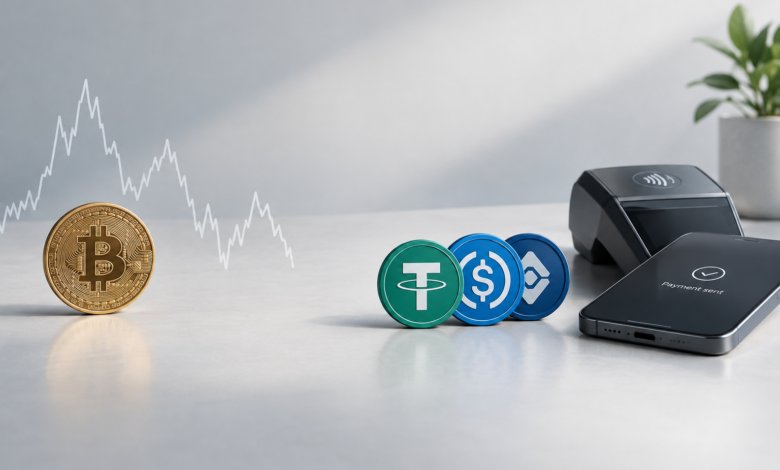
The payment utility of cryptocurrencies has grown as blockchain assets have shifted from speculative investments to viable alternatives to fiat currencies, though choosing which token to use can still confuse holders. The general consensus at the moment is that it’s far wiser to rely on stablecoins when making purchases and deposits to the digital platforms that support crypto for these purposes, rather than selecting alternatives that can be subject to significant price volatility. Here’s why.
The Value of Certainty
Volatile tokens aren’t suited to payment for the simple fact that the lack of certainty around their worth leaves the door open for all sorts of issues before, during, and after a transaction. So, for example, buying a product worth $5 with Bitcoin is a risk because the price of crypto’s best-known token can vary wildly from moment to moment, meaning you’ll potentially be left overpaying if the market spikes, or even finding that you’ve underpaid between the point at which you initiate the transaction and the purchase going through.
Conversely, stablecoins are pegged to a fiat currency which, by design, will have a far less volatile price point. Pay for that aforementioned $5 product with a stablecoin, and all of the concerns evaporate. Predictability of price also gives you an easier time when managing a budget, and in turn this gives credence to the idea that crypto tokens have the same utility as traditional currencies.
So, whether you’re using crypto to buy products from e-commerce sites or to game on Impressario, this value of certainty makes stablecoins a preferred option.
The Speed Factor
Another upside to using stablecoins for everyday payments is that they’re usually based on high-speed blockchain networks that can push through transactions in what feels like an instant to the end user. That’s not only better in terms of speed than some of their more volatile counterparts in the crypto space, but also has the jump on legacy banking options in many cases, where money transfers and card payments might require hours or even days of waiting.
The advantages are amplified if you’re making payments across borders, because again, the speed of stablecoins outstrips what’s possible via other methods, whether crypto- or fiat-based. Then there are the lower costs involved, because card processing fees can quickly add up if you’re using old-school methods, but such annoyances tend not to exist if stablecoins are chosen instead.
The Accessibility Angle
Last of all, the selling point of stablecoins for everyday payments stems from how simple it is for anyone to set up a digital wallet and start using them, without having to go through the rigmarole of opening a bank account or dealing with credit card applications. It’s this frictionless approach to access that makes crypto and decentralized tech in general so egalitarian, and enables consumers to shake off the restrictions of incumbent financial institutions as they go about their business.
So, choosing voltalie tokens for investment purposes and stablecoins for regular transactions makes sense no matter your use case.
Source link