


What You Will Accomplish
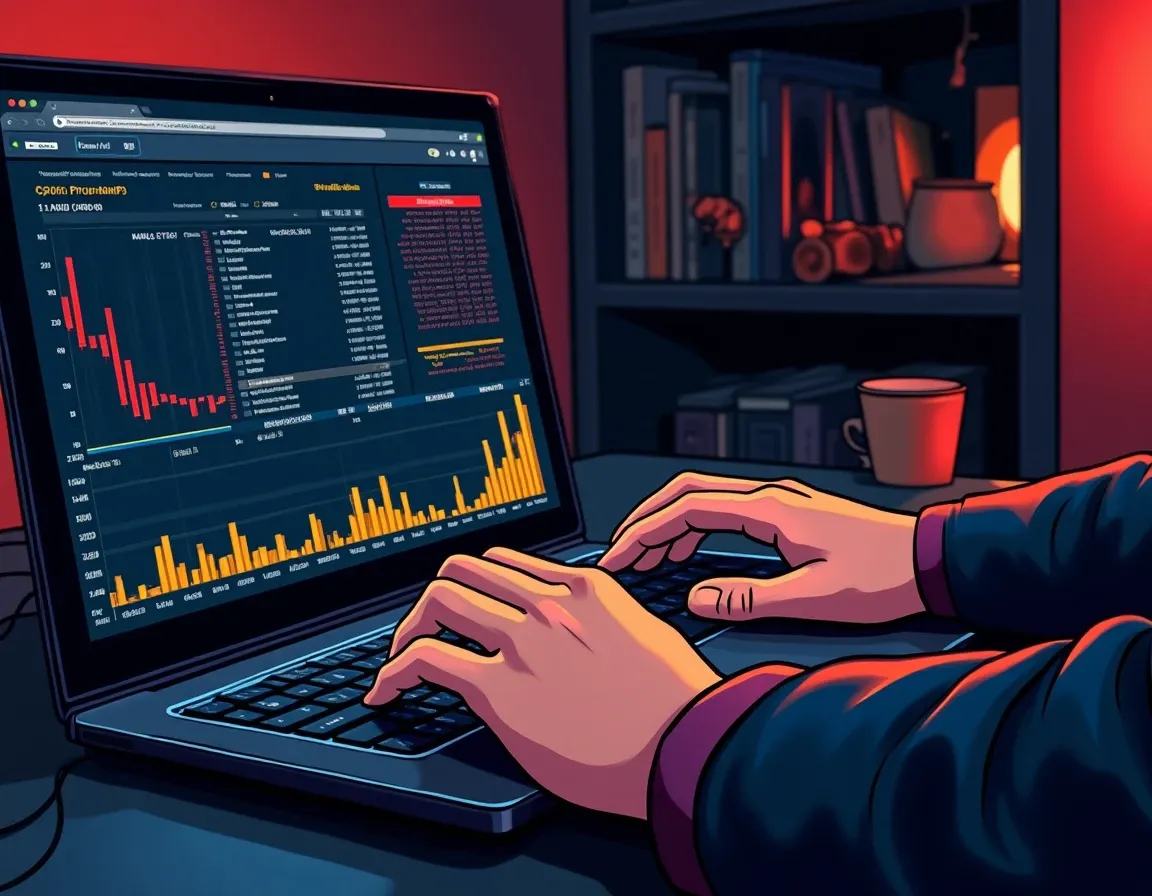
Centrifuge USDS paid 3.76% APY on $324 million in total value locked. Then it disappeared from yield tracking entirely. The pool did not appear on DefiLlama, it did not appear on secondary aggregators, and readers holding $50,000 to $200,000 in that position had no visibility into whether their capital was still earning, whether the underlying real-world assets had defaulted, or whether the tracking infrastructure had simply stopped updating.
This article provides the 72-hour investigative protocol that distinguishes between five failure modes: tracking threshold crossing, originator default, oracle failure, pool closure, and wrapper liquidity collapse. You will learn where to query live pool data, how to verify underlying collateral health, how to check redemption queue status, and when to initiate capital recovery. The difference between a data gap and an actual credit event determines whether you wait, withdraw, or file claims. On $200,000 in a vanished pool, that decision matters.
You will need access to the Centrifuge GraphQL API, a blockchain explorer for the Centrifuge Chain, and basic familiarity with how DeFi stablecoin yield mechanics work. No protocol-specific background is required. This is the investigative checklist I would run if my own capital disappeared from tracking overnight.
Step 1: Confirm The Pool Still Exists On-Chain (15 Minutes)
The first step separates tracking failure from pool closure. Yield aggregators do not track every pool continuously. DefiLlama aggregates 8,000 protocols across 461 chains, and adapter failures cause silent disappearances even when the underlying pool remains live. Your job is to verify that the pool itself still exists, that it still holds capital, and that it still reports a net asset value.
Navigate to the Centrifuge GraphQL API at api.centrifuge.io. Query the pool registry for the specific pool ID associated with the USDS vault. The query structure is straightforward: request pool status, current NAV, total value locked, and tranche-level data. If the pool returns current data with a non-zero NAV and a TVL figure within 10% of the last tracked value, the pool is live. The tracking infrastructure failed, not the pool itself.
If the pool ID no longer appears in the registry, or if the NAV has dropped to zero, proceed to Step 3. If the pool exists but TVL has collapsed by more than 50%, proceed to Step 4. If the pool exists with stable TVL but no yield data, the issue is either oracle failure or a change in yield calculation methodology. Mark that finding and continue to Step 2.
Common failure mode: the pool migrated from one spoke chain to another as part of Centrifuge’s hub-and-spoke architecture. Each pool selects a single hub chain for management and can tokenize and distribute liquidity on many spoke chains. If the USDS vault moved from Ethereum mainnet to Base or Arbitrum, the old contract address will show zero TVL even though capital migrated safely. Check the Centrifuge documentation for recent migration announcements before assuming capital loss.
Step 2: Verify Underlying Collateral Health (30 Minutes)
Real-world asset pools introduce credit default risk that pure crypto collateral does not. There is exactly one failure mode specific to RWA: the tokens stop being backed by the thing they represent, and nothing on-chain notices by itself. Goldfinch is the clean case study. Heavily audited code, no code bug, but real borrowers stopped paying and the tokens outran their backing until depositors ran. That gap has a name and a fix: proof-of-reserves, a live on-chain check that issued supply never exceeds real reserves.
For Centrifuge pools, the collateral backing sits off-chain. The pool is created by an issuer and mapped to off-chain assets. The vault, built on the ERC-7540 asynchronous standard that Centrifuge co-authored, handles deposits, redemptions, and yield. Your task is to verify that the off-chain collateral has not experienced a credit event that would impair the vault’s ability to redeem at par.
Check the pool documentation for the identity of the asset originator. For the USDS pool, determine whether the underlying collateral consists of US Treasuries, corporate debt, private credit, or a diversified basket. Cross-reference the originator’s public disclosures if available. For institutional funds like JTRSY and JAAA, which together represent approximately 95% of Centrifuge’s $1.6 billion TVL, quarterly disclosures provide collateral composition and credit quality.
If the pool holds private credit, verify that no public default notices have been filed. Private credit introduces credit default risk, lockup risk (tokens may not be redeemable on demand), and structural complexity from tranching and off-chain servicing. A single borrower default in a thinly diversified pool can reduce NAV by 10% to 30% before on-chain systems reflect the impairment. If you cannot verify collateral health within 30 minutes, treat the position as impaired and proceed to Step 5.
If collateral appears intact, the disappearance from tracking is likely technical rather than fundamental. Continue to Step 3 to rule out oracle failure.
Step 3: Check Oracle Health And Price Feed Status (20 Minutes)
Yield tracking depends on live price feeds that report pool NAV, interest accrual, and redemption rates. If the oracle that signs those prices stops updating, aggregators cannot calculate APY even if the pool continues to accrue yield. Oracle failure is invisible to most users because the pool contract itself may continue functioning normally while external tracking breaks.
Identify which oracle service feeds NAV data to the Centrifuge pool. Check the oracle contract for the timestamp of the last price update. If the last update occurred more than 48 hours ago, the oracle has likely failed or been deprecated. Verify whether the contract enforces timestamp windows, monotonic timestamps, deviation bounds, and cross-feed checks. These safeguards prevent stale data from being treated as current, but they also cause tracking to halt when fresh data stops arriving.
Who signs prices, where those keys live, and whether the contract enforces these checks become critical when yield tracking suddenly stops. If the oracle is operational and updating within normal intervals, the issue is not oracle failure. Return to Step 1 and confirm whether the aggregator’s adapter for this specific pool has been deprecated or misconfigured.
If the oracle has failed, your capital is likely safe but your yield visibility is gone. You can still initiate redemptions through the pool’s native interface, but you will not have real-time APY tracking until the oracle resumes. Document the oracle failure and proceed to Step 5 to decide whether to withdraw or wait for restoration.
Step 4: Verify Pool Closure Or Redemption Queue Status (25 Minutes)
Centrifuge pools process deposits and redemptions asynchronously through an epoch mechanism. Because Liquidity Pools communicate with Centrifuge Chain through messaging layers, deposits and redemptions cannot be executed automatically. Instead, they are queued and executed at the end of each epoch, which typically lasts 24 hours. If a pool has been closed by the issuer, new deposits are rejected and existing redemptions are processed until the pool winds down to zero.
Query the Centrifuge Chain explorer for the pool’s current epoch status. Check whether redemption requests are being processed normally or whether they have been paused. A paused redemption queue signals either a liquidity crisis or an issuer decision to wind down the pool in an orderly fashion. If redemptions are processing normally and you can submit a test redemption (even a $1 withdrawal to verify functionality), the pool remains operational despite disappearing from tracking.
If redemptions are paused, determine the reason. Pool issuers are required to announce closures and provide a wind-down timeline. Check the Centrifuge governance forum, the pool’s official documentation, and any public communication channels. If no announcement exists and redemptions are paused without explanation, treat this as a red flag and escalate to formal capital recovery procedures.
Common scenario: the pool crossed below the tracking threshold. DefiLlama drops pools below $1 million TVL by default, though the $324 million USDS pool would not have crossed that minimum. Other aggregators use different thresholds. If withdrawal velocity exceeded new deposits and TVL collapsed from $324 million to below $50 million in a short period, secondary trackers may have delisted the pool even though it remains functional. Verify current TVL through the GraphQL API and compare it to the last tracked figure. A 70% to 90% TVL drop without a corresponding collateral impairment suggests a coordinated exit by large holders, not a credit event.
Step 5: Decide Whether To Withdraw, Wait, Or File Claims (20 Minutes)
You now have enough information to make a capital decision. If the pool remains live on-chain with intact collateral and functional redemptions, the disappearance from tracking is a data issue, not a capital issue. You can choose to hold the position and monitor directly through the Centrifuge API, or you can redeem and migrate to a tracked alternative. The decision depends on your operational tolerance for manual monitoring and your confidence in the underlying collateral.
If redemptions are paused or collateral health cannot be verified, initiate a redemption request immediately. Centrifuge’s asynchronous redemption model means your request will be queued and processed at the next epoch close, but you will secure your place in the redemption queue ahead of other holders who delay. In a liquidity crisis, early redemption requests are more likely to be fulfilled before the pool exhausts available liquidity.
If the pool has been formally closed and a wind-down timeline has been published, compare the projected redemption schedule to your liquidity needs. Most RWA pool wind-downs take 30 to 90 days as underlying assets mature or are sold. If you require immediate liquidity, you may need to sell your vault tokens on the secondary market at a discount. Instant USDC exits, like Centrifuge’s JTRSY facility, are the exception, not the rule. If deRWA wrappers lost on-chain liquidity, you will face either illiquidity or significant slippage.
If collateral has demonstrably defaulted and redemptions are impaired, document the timeline of your deposit, the yield received, and all communications with the pool issuer. File a claim through the appropriate legal or regulatory channel depending on the issuer’s jurisdiction. For pools issued under Malta Gaming Authority or Isle of Man oversight, investor protection mechanisms exist but require formal claims documentation. For pools issued under less stringent jurisdictions, recovery is unlikely without legal action.
For positions under $10,000, the cost of formal claims likely exceeds recovery value. For positions above $50,000, consult a legal professional with RWA tokenization experience before writing off the capital. On $200,000 in a defaulted pool, structured recovery through legal channels can retrieve 30% to 60% of principal even in worst-case scenarios.
Ongoing Monitoring And Prevention
Once you have resolved the immediate capital question, implement monitoring safeguards to detect future tracking failures before they become capital crises. Set up direct API monitoring for any RWA pool position above $25,000. The Centrifuge GraphQL endpoint allows you to query pool NAV, TVL, and redemption queue status without relying on third-party aggregators. A simple script that pings the API once per day and alerts you to NAV drops above 5% or TVL drops above 20% provides early warning for credit events.
Diversify tracking sources. If a position disappears from DefiLlama, cross-check against RWA.xyz, the Centrifuge native dashboard, and any protocol-specific tracking tools. Single-point tracking dependency creates blind spots that can delay your response to genuine crises by 24 to 72 hours. When yield positions disappear from tracking, having three independent data sources lets you distinguish between adapter failures and actual pool failures within two hours instead of two days.
For RWA pools specifically, monitor concentration risk in the top two assets. Roughly 95% of Centrifuge’s $1.6 billion TVL comes from two Janus Henderson funds, JTRSY and JAAA. If those two pools experience credit stress, the contagion risk to smaller pools is significant because shared infrastructure, shared oracles, and shared liquidity mechanisms create correlated failure modes. When institutional fund TVL drops by more than 10% in a single week, reduce exposure to all Centrifuge pools regardless of their individual tracking status.
Track redemption queue depth as a leading indicator. A healthy RWA pool processes redemptions within one to two epochs. If redemption queue depth grows to more than 5% of total pool TVL, it signals either a loss of depositor confidence or a liquidity mismatch between on-chain redemption requests and off-chain asset maturity. Either condition creates downward pressure on secondary market pricing and increases the likelihood that the pool will be deprecated or closed. Exit before queue depth exceeds 10% of TVL unless you have specific insider confidence in collateral quality.
The Takeaway
When Centrifuge USDS dropped from 3.76% on $324 million TVL to zero tracked yield, the investigative protocol required five steps: confirm on-chain pool existence through the GraphQL API, verify underlying collateral health by identifying the asset originator and checking for default notices, audit oracle health to rule out stale price feeds, check redemption queue status on Centrifuge Chain to distinguish normal operations from wind-down, and execute a capital decision based on the findings. The 72-hour window matters because early redemption requests are prioritized in liquidity crises, and delayed responses can cost you your place in the queue. On $200,000 in a vanished pool, running this protocol separates recoverable capital from permanent loss. Set up direct API monitoring for any RWA position above $25,000, diversify tracking sources across three independent aggregators, and exit when redemption queue depth exceeds 10% of pool TVL. The next pool disappearance will follow the same pattern, and the protocol remains identical.
Frequently Asked Questions
What does it mean when a DeFi pool disappears from yield tracking?
It means aggregators like DefiLlama no longer display APY data for that pool. The pool itself may still be live on-chain and accruing yield normally. Tracking failures happen when adapters break, pools migrate to new chains, oracles stop updating, or TVL drops below tracker thresholds. Verify pool status directly through protocol APIs before assuming capital loss. Most disappearances are data issues, not pool closures.
How do I verify if a Centrifuge pool is still operational?
Query the Centrifuge GraphQL API at api.centrifuge.io for the pool’s current status, NAV, and TVL. If the pool returns non-zero NAV and TVL within 10% of the last tracked value, it remains live. Check the Centrifuge Chain explorer for epoch processing status and redemption queue activity. If redemptions are processing normally, the pool is operational regardless of aggregator tracking status.
What are the risks specific to RWA stablecoin pools?
Real-world asset pools face credit default risk from off-chain borrowers, lockup risk during redemption queues, and oracle dependency for NAV reporting. If underlying collateral defaults, on-chain systems may not reflect impairment for days or weeks. Private credit pools are particularly vulnerable because single borrower defaults can reduce NAV by 10% to 30%. Always verify collateral composition and originator identity before depositing into RWA pools.
When should I withdraw from a pool that disappeared from tracking?
Withdraw immediately if redemptions are paused, collateral health cannot be verified within 30 minutes, or NAV has dropped by more than 10% without explanation. If the pool is live with intact collateral and functional redemptions, the decision depends on your tolerance for manual monitoring. For positions above $50,000, initiate redemption at the first sign of redemption queue depth exceeding 10% of pool TVL.
How can I prevent losing visibility into my RWA yield positions?
Set up direct API monitoring for any position above $25,000. Query pool NAV and TVL daily through protocol-specific endpoints instead of relying on aggregators. Diversify tracking sources across DefiLlama, RWA.xyz, and native protocol dashboards. Monitor redemption queue depth as a leading indicator. Exit when queue depth exceeds 10% of TVL or when top institutional pools experience TVL drops above 10% in a single week.
The Weekly Yield Report
You just reviewed the five-step protocol that distinguishes tracking failure from capital loss when RWA pools vanish. The next pool disappearance will require the same investigative checklist within the same 72-hour window.
Every Thursday: where crypto yield actually is – stablecoins, liquid staking and DeFi lending, with the risk named next to the rate and what changed since last week.
Free. No trade calls, no allocations, no hype. Unsubscribe in one
click.
Source link