


The Platform Mechanism

On October 15, 2026, Mastercard launched its Global Money Platform in partnership with BVNK, three days after closing its $1.8 billion acquisition of the stablecoin infrastructure provider. The platform connects Mastercard Move, which reaches more than 17 billion endpoints, with BVNK’s stablecoin technology through a unified API. Early adopters include Nuvei, Marqeta, Ontop, Beem, and Almond FinTech.
The mechanism works in three steps. First, a user holds stablecoin balances in a BVNK-connected wallet or account. Second, the user initiates a payment through the Global Money Platform API. Third, the platform converts the stablecoin to local fiat currency and delivers it to the recipient’s bank account. Coverage is expected to expand to more than 40 currencies across 200-plus countries and territories in 2027.
This is not a yield mechanism. It is a stablecoin utility mechanism. The platform does not generate income from stablecoin holdings. It converts stablecoin balances into payment rails. The income question is whether this conversion path opens new arbitrage, liquidity provision, or payment-processing opportunities for users who already hold stablecoins.
The Stablecoin Velocity Thesis

The platform’s core contribution is velocity, not return. Stablecoins sitting in wallets generate zero income unless deployed into lending, liquidity pools, or staking derivatives. The Global Money Platform does not change that. What it changes is the exit path. Users can now spend stablecoin balances directly into Mastercard’s acceptance network of hundreds of millions of merchant locations without converting to fiat on an exchange first.
This matters for three user types. First, individuals in countries with capital controls or currency volatility who hold stablecoins as savings. Second, businesses that receive stablecoin payments and need to convert to fiat for payroll or vendor payments. Third, payment processors and remittance services that route cross-border transfers through stablecoins to reduce settlement time and fees.
None of these use cases generate yield. They reduce friction and increase optionality. The income angle is indirect. If stablecoins become easier to spend, demand for stablecoin balances may increase, which could expand DeFi protocol liquidity and improve yields on stablecoin lending or liquidity provision. That is a second-order effect. The platform itself does not pay users for holding or spending stablecoins.
The Payment Processor Economics

Payment processors and businesses using the platform will face specific cost structures. Mastercard has not disclosed transaction fees for the Global Money Platform, but standard cross-border payment rails charge 2-4% in fees and FX spreads. Stablecoin settlement typically costs 0.1-0.3% in network fees plus exchange spread.
If the Global Money Platform charges fees competitive with traditional rails, the cost savings are minimal. If it charges fees closer to stablecoin-native settlement, the arbitrage opportunity is the spread between traditional payment processors and the new platform. Businesses that process high volumes of cross-border payments could capture 1-3% in cost savings by routing payments through stablecoins instead of correspondent banking networks.
This is not passive income. It is operational cost reduction. A remittance provider sending $10 million per month across borders and paying 3% in fees saves $300,000 annually by switching to a 1% platform fee structure. That is a margin improvement, not a yield strategy. The mechanism depends on transaction volume, not capital deployment.
The Stablecoin Demand Impact
The platform creates demand for stablecoins in proportion to transaction volume. If businesses and consumers spend $1 billion per month through the Global Money Platform, that is $1 billion in stablecoin demand that did not exist before. This demand flows into one of three places. First, existing stablecoin holders spend down balances. Second, new users mint stablecoins by depositing fiat. Third, businesses hold stablecoin float balances to facilitate recurring payments.
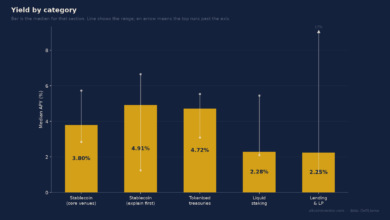
The third category is where income potential emerges. Businesses that hold stablecoin float balances for payment processing can deploy those balances into short-duration yield strategies while waiting for payment settlement. A company holding $5 million in USDC float can lend it on Aave or Compound at current rates of 4-6% APY. If the average holding period is two weeks before spending, the annualized return on float is proportional to deployment duration.
This is not new. Corporate treasury teams already deploy fiat float into money market funds. The Global Money Platform makes stablecoin float operationally viable for businesses that previously avoided crypto exposure due to off-ramp friction. The income mechanism is existing DeFi lending, not the platform itself.
The Failure Modes
The platform has three failure modes. First, stablecoin depeg risk. If USDC or USDT depegs during a transaction, the recipient receives less fiat than expected. The platform does not specify which stablecoins it supports or whether it guarantees peg stability during conversion. Users bear this risk unless Mastercard backstops it.
Second, regulatory restriction. If jurisdictions ban or restrict stablecoin usage, the platform’s coverage contracts. Mastercard claims 200-plus countries and territories, but stablecoin regulatory status is unresolved in most of them. A regulatory crackdown in the EU, US, or major Asian markets would reduce the platform’s addressable network.
Third, competitive displacement. Stablecoin issuers like Circle and Tether are building their own payment rails. Circle’s USDC payment infrastructure already supports direct merchant settlement. If stablecoin issuers bypass Mastercard by offering lower-fee direct rails, the Global Money Platform loses its cost advantage. The platform’s moat is Mastercard’s existing merchant network. If merchants integrate stablecoin payments natively, that moat erodes.
The Verification Path
To verify whether the platform creates income opportunities, monitor three on-chain metrics. First, stablecoin minting and burning volume. If the Global Money Platform drives significant transaction volume, stablecoin supply should increase proportionally. Track USDC and USDT supply on-chain using Circle’s transparency reports and Tether’s attestations.
Second, stablecoin lending rates on major DeFi protocols. If businesses deploy stablecoin float balances into lending markets, utilization rates on Aave, Compound, and similar platforms should increase, pushing yields higher. Compare current stablecoin lending APYs to historical averages to identify demand shifts.
Third, payment processor adoption. Nuvei, Marqeta, Ontop, Beem, and Almond FinTech are early adopters. Monitor their transaction volumes and public disclosures about stablecoin payment adoption. If these processors route significant volume through the platform, that validates the utility thesis. If adoption stalls, the platform is not capturing meaningful market share.
The Takeaway
Mastercard’s Global Money Platform is a stablecoin utility layer, not a yield mechanism. It enables spending but does not pay holders. The income angle is indirect: businesses that hold stablecoin float for payment processing can deploy that float into existing DeFi lending strategies. The platform’s success depends on transaction volume, regulatory acceptance, and competitive positioning against stablecoin-native payment rails. Monitor on-chain stablecoin supply, DeFi lending utilization, and payment processor adoption to verify whether the platform drives material stablecoin demand. If it does, the second-order effect is higher yields on stablecoin lending as float balances increase.
Frequently Asked Questions
Does Mastercard’s Global Money Platform generate yield on stablecoin holdings?
No. The platform is a payment utility layer that converts stablecoins to fiat for merchant settlement. It does not pay interest or yield on stablecoin balances. Users can deploy stablecoin float into existing DeFi lending protocols like Aave or Compound to earn 4-6% APY, but that yield comes from third-party lending markets, not the Mastercard platform itself.
What stablecoins does the Global Money Platform support?
Mastercard has not disclosed which specific stablecoins the platform supports. USDC and USDT are the most likely candidates given their market dominance and regulatory acceptance. The platform’s announcement mentions stablecoin technology from BVNK but does not specify asset restrictions. Users should verify supported assets before deploying capital into the platform.
What are the transaction fees for using the Global Money Platform?
Mastercard has not disclosed transaction fees. Traditional cross-border payment rails charge 2-4% in fees and FX spreads. Stablecoin-native settlement typically costs 0.1-0.3% in network fees plus exchange spread. If the platform charges fees closer to stablecoin-native rates, businesses could save 1-3% on cross-border payments. Fee disclosure will determine the platform’s cost advantage over existing rails.
What happens if a stablecoin depegs during a payment transaction?
The platform has not disclosed depeg protection mechanisms. If USDC or USDT depegs during transaction processing, the recipient may receive less fiat than expected based on the original stablecoin amount. Users bear this risk unless Mastercard guarantees peg stability during conversion. This is a critical failure mode for businesses processing high-volume payments through the platform.
How can I verify whether the platform is driving stablecoin adoption?
Monitor three on-chain metrics. First, track USDC and USDT supply using Circle’s transparency reports and Tether’s attestations. Second, compare stablecoin lending rates on Aave and Compound to historical averages to identify demand shifts. Third, follow transaction volume disclosures from early adopters like Nuvei, Marqeta, and Ontop. Rising supply, higher utilization rates, and growing processor volumes validate adoption.
The Weekly Yield Report
You have just decomposed Mastercard’s stablecoin platform and identified three failure modes. Coverage will expand to 40 currencies in 2027, and those numbers will shift.
Every Thursday: where crypto yield actually is – stablecoins, liquid staking and DeFi lending, with the risk named next to the rate and what changed since last week.
Free. No trade calls, no allocations, no hype. Unsubscribe in one
click.
Source link