


Opening Note
Greetings Altcoin Investors! Welcome to another edition of the AltcoinInvestor Daily Digest, your premier source of crypto market analysis, altcoin trends, and blockchain innovation highlights. Whether you’re a seasoned trader, a long-term HODLer, or simply curious about the decentralized revolution, we have something for you in today’s newsletter. In this issue, we explore the latest shifts in market sentiment, spotlight major developments in altcoin ecosystems, and break down what these changes could mean for investors like you. Grab your wallets and let’s dive into the latest movements across the cryptosphere.
Market Recap
The cryptocurrency market has experienced modest retracement over the past week as investors brace for potential shifts in macroeconomic policy from the Federal Reserve. Uncertainty surrounding interest rate adjustments and inflation data triggered some market-wide hesitation. While many major assets managed to hold key support levels, others encountered minor dips, reflecting a cautious, wait-and-see attitude among market participants.
Bitcoin (BTC) is currently trading in a consolidation range, hovering just above the $60,000 mark after testing lower support zones earlier in the week. Meanwhile, Ethereum (ETH) has seen a tighter trading band around $3,200, catching some tailwinds from layer-2 scaling developments and ETH 2.0 staking adoption. The altcoin market remains highly fragmented, with some tokens riding bullish narratives and others facing profit-taking pressures.
Investor sentiment, as measured by various crypto fear and greed indices, has slightly dipped into the ‘neutral’ zone — potentially signalling a pause in widespread market euphoria and an opportune time for strategic accumulation. It’s clear that while the broader uptrend of 2024 remains intact, we are currently in a phase of consolidation, reassessment, and accumulation.
Featured Trend or Insight
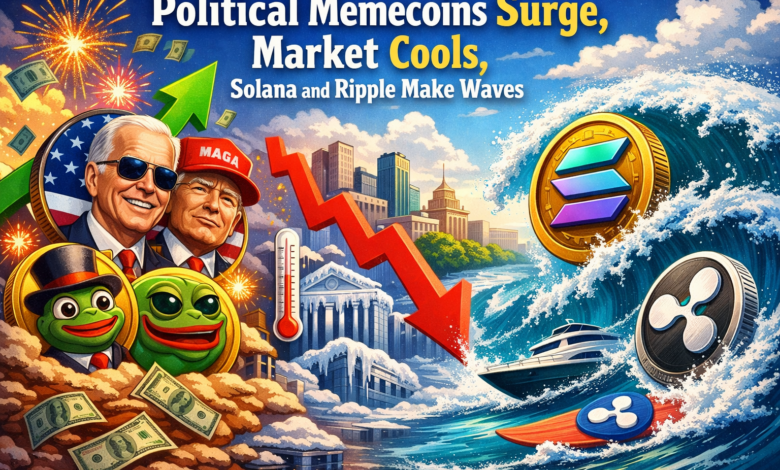
One of the most fascinating narratives emerging in the memecoin space this year revolves around politically-themed tokens. As we head deeper into a major global election cycle, politically charged coins — such as TrumpCoin, BidenToken, and other satirical digital assets — have sparked intense speculation. These ‘political memecoins’ have become a novel way for the crypto community to fuse internet culture and real-world politics.
Much like traditional memes, the value of these tokens is driven by virality, sentiment, and cultural relevance over fundamental utility. In just a few weeks, tokens related to U.S. political figures saw meteoric rises — with some realizing thousands of percent in returns — only to experience swift corrections as interest waned and liquidity dried up. It was a high-risk, high-volatility scenario that mirrored classic attributes of bull market manias.
While many of these tokens lack long-term sustainability, it’s worth noting how memecoins continue to dominate headlines and trading volumes. Their speculative nature makes them highly risky, but for short-term traders, they present unique opportunities if navigated with caution. This political memecoin wave demonstrates how far-reaching blockchain can be as a tool for expression — and how speculative markets intersect with global current events.
Top Gainers & Losers
Let’s take a closer look at some of this week’s top performers — as well as those facing headwinds in the market:
- Top Gainers:
- Solana (SOL): Riding high on strong on-chain activity and recent listings on regulated exchanges, Solana continues to capture institutional and retail demand. Brazil’s main financial exchange added Solana to its listing roster, underscoring growing interest in regulated access to digital assets. DeFi platforms built on Solana have also shown consistent user growth, helping to buoy SOL’s price momentum.
- Render (RNDR): With AI and graphics compute demands rising globally, RNDR’s decentralized GPU rendering infrastructure is becoming more attractive to developers and content creators. RNDR surged more than 20% following partnerships with major content studios.
- Top Losers:
- Ronin (RON): Despite a strong start to the year, Ronin’s onchain activity has slowed. An unexpected drop in daily active users and transaction volume has raised concerns about the growth trajectory of its gaming ecosystem.
- ZKsync (ZKS): Although still a long-term contender in the layer-2 scaling race, ZKsync has faced developer delays in recent rollup deployments. Additionally, some liquidity withdrawal concerns have led to bearish short-term sentiment.
News Highlights
- Trump’s Statement on Crypto Enforcement: Former President Donald Trump stated he would ‘look into’ the conviction of Samourai Wallet’s co-founder, stirring debate about executive action and regulatory overreach in crypto technology cases. This comes amid broader election-cycle rhetoric about digital asset innovation and decentralization.
- Grayscale’s Bitcoin Forecast: Grayscale Investment dropped a new report predicting that Bitcoin could reach a new all-time high within the next 6 months. Key factors include ETF flows, the halving impact, and rising institutional allocations. Explore our Bitcoin Price Prediction report for a full breakdown.
- Ripple Expands to Layer 2s: Ripple has begun testing its U.S. dollar-backed RLUSD on major Ethereum Layer 2s as part of a broader initiative to build multichain liquidity and interoperability. This strategic move could add significant utility across DeFi protocols by offering fast and low-cost USD-pegged transactions.
- Visa Integrates Solana for USDC Settlements: A major institutional breakthrough arrives as Visa initiates U.S. bank integrations for instant USDC settlements using Solana’s blockchain infrastructure. The implications for cross-border payments and treasury management are immense. Expect further acceleration of crypto-native rails within legacy financial institutions.
- UK Crypto Discussions Begin: United Kingdom regulators have commenced formal discussions on setting clear regulatory guidance for crypto exchanges, lending services, and emerging DeFi protocols. This marks another step toward establishing a structured and secure environment for crypto innovation while protecting retail investors.
On Our Radar
One of the most promising developments under watch this week is the anticipated legislation known as the GENIUS Act. If passed, this law would enable U.S. banks to issue their own stablecoins, potentially paving the way to a significant fusion between centralized finance and decentralized digital asset ecosystems.
This move could have tremendous implications: from increased consumer trust due to stablecoin backing by FDIC-insured banks, to higher velocity of money in blockchain-based economies. Imagine receiving your paycheck in a U.S. bank-backed stablecoin and instantly using it within DeFi protocols, all while maintaining regulatory compliance. The GENIUS Act could introduce a seismic shift in how we engage with both traditional and modern finance sectors. As always, we’ll keep you updated should this bill proceed towards congressional approval and eventual implementation.
Closing Line
Thanks for tuning in to this edition of the AltcoinInvestor Daily Digest. The world of crypto is ever-changing, fast-paced, and full of opportunities for those who stay informed. Our mission is to simplify this complexity by bringing you accurate, actionable, and insightful updates — straight to your inbox. If you haven’t subscribed yet, sign up now and stay ahead of the digital revolution.
Until next time, happy researching, keep learning, and never stop exploring the endless potential of crypto investing.
For real-time coverage, market updates, and expert-led analysis, we encourage you to visit our trusted source at Cointelegraph.
Source link